Ever Wonder Why Your Mobile Internet Sometimes Feels Fast and Sometimes Doesn’t?
You’re on a video call, everything is smooth, and then suddenly, buffering. Or maybe you’re deploying an app update from your laptop hotspot and thinking, “This should be faster, right?”
If you’ve ever wondered what’s happening behind your mobile internet, you’re not alone. Many developers, remote workers, and everyday users depend on LTE internet without fully understanding how it works or why it behaves the way it does.
This article is a straightforward, developer-friendly breakdown of LTE networks: what they are, how they work, and why they still matter in a world that keeps discussing 5G. There’s no marketing fluff or buzzwords. You’ll find real explanations, practical insight, and honest context.
What Is LTE, Really?
LTE, or Long Term Evolution, is a wireless broadband standard designed to deliver faster and more reliable mobile data than older technologies like 3G.
Despite what many people think, LTE isn’t just “mobile internet.” It’s a carefully engineered system that improves:
- Speed
- Latency
- Network efficiency
- Device mobility
When you connect your phone, hotspot, or router to an LTE network, you’re using a packet-switched data system optimized for modern internet needs streaming, cloud apps, APIs, and real-time communication.
A Quick Backstory: Why LTE Was Needed
Before LTE, mobile data felt… limited. 3G networks struggled with:
- High latency
- Inconsistent speeds
- Poor performance under load
As smartphones, cloud apps, and mobile development grew, carriers needed something better. LTE was built to handle data-first communication, not voice-first like earlier generations. That shift is why LTE still feels usable today, even as technology advances.
How an LTE Network Works (Without the Telecom Jargon)
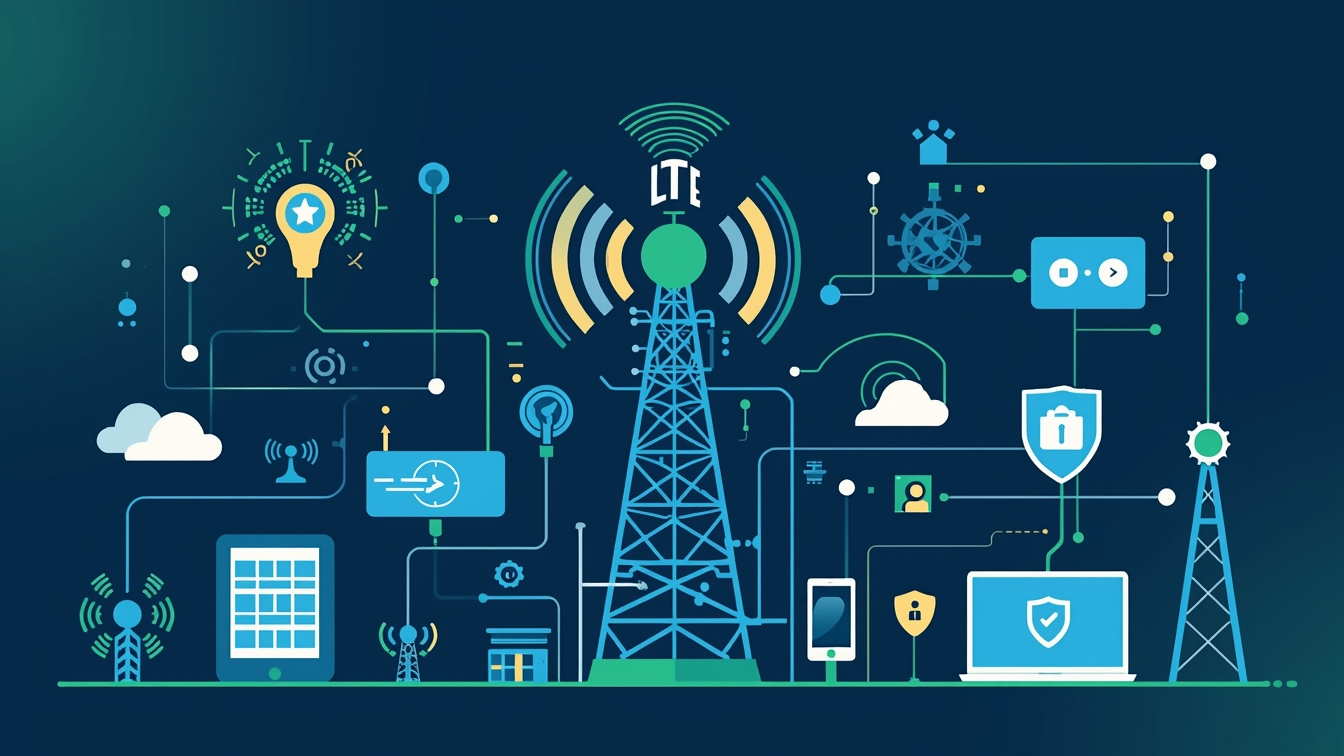
At a high level, an LTE connection works like this:
- Your device sends data wirelessly to the nearest cell tower
- The tower routes that data through the LTE core network
- Data reaches the internet (or another device)
- The response travels back the same way
What makes LTE different is how efficiently it does this.
LTE uses:
- All-IP networking (similar to how the internet itself works)
- Advanced modulation techniques
- Smarter resource allocation between users
For developers, this means fewer unpredictable bottlenecks compared to older mobile standards.
Key Features of LTE Technology
1. Faster Data Speeds (Compared to Legacy Networks)
While real-world speeds vary, LTE data is significantly faster than 3G.
Typical LTE speeds support:
- HD video streaming
- Remote development work
- API calls and cloud syncing
- VoIP and video conferencing
Is it fiber-fast? No. Is it usable and dependable? Absolutely.
2. Lower Latency (The Underrated Advantage)
Latency matters more than raw speed for many applications.
LTE reduces round-trip time, which improves:
- App responsiveness
- Web page loading
- Online gaming stability
- Real-time collaboration tools
For developers testing mobile-first products, this difference is noticeable.
3. Better Network Efficiency
LTE networks dynamically allocate bandwidth based on demand.
That means:
- Less congestion during peak usage
- Fairer distribution of data
- More stable performance across devices
It’s not perfect, but it’s a big leap from older mobile systems.
4. Strong Mobility Support
LTE was designed for movement.
Whether you’re:
- Traveling
- Commuting
- Working from an RV
- Switching between towers
An LTE connection can maintain sessions with minimal interruption. This is why LTE remains popular for mobile work setups.
5. Voice and Data Integration
Even voice calls on LTE (VoLTE) are handled as data packets.
This improves:
- Call quality
- Connection reliability
- Battery efficiency
Everything rides on the same optimized network.
LTE vs 5G: Should Developers Still Care?
Short answer: yes. While 5G gets the headlines, LTE still:
- Covers more geographic areas
- Offers more consistent real-world performance
- Powers millions of IoT devices
- Serves as a fallback even on 5G phones
Many applications are still built, tested, and deployed assuming LTE-level performance. Ignoring it means ignoring a large portion of real users.
Real-World Benefits of LTE Connectivity
For Developers
- Reliable testing environment for mobile apps
- Predictable performance across regions
- Easier debugging compared to unstable networks
For Remote Workers
- Portable internet without fixed infrastructure
- Backup connectivity when broadband fails
- Usable speeds for cloud-based tools
For Businesses
- Fast deployment in rural or temporary locations
- Scalable connectivity
- Reduced dependency on wired networks
LTE technology fills the gap between convenience and capability.
Common Misunderstandings About LTE
“LTE Is the Same as 4G”
Not exactly. LTE was originally a step toward true 4G standards. Over time, it evolved and now meets most practical 4G expectations, but the terms are often used loosely.
“LTE Is Obsolete”
Far from it. LTE continues to improve through LTE-Advanced and carrier upgrades. Many modern networks rely on LTE as their backbone.
“LTE Is Only for Phones”
LTE powers routers, hotspots, IoT devices, vehicles, and industrial systems, not just smartphones.
LTE and IoT: A Quiet Powerhouse
Many connected devices rely on LTE because it offers:
- Wide coverage
- Low power modes
- Stable data transfer
From asset tracking to smart sensors, LTE connectivity remains a practical choice for long-term deployments.
When LTE Internet Makes the Most Sense
LTE internet shines when:
- Wired broadband isn’t available
- Flexibility matters
- Mobility is required
- Setup time must be minimal
It’s not always the fastest option, but it’s often the most practical.
Limitations You Should Be Aware Of
Honesty matters. LTE networks can be affected by:
- Signal strength
- Network congestion
- Physical obstructions
- Carrier policies
Performance isn’t guaranteed, but understanding these limits helps set realistic expectations.
Conclusion
LTE Isn’t Flashy, But It’s Reliable.
LTE doesn’t try to impress. It just works. And sometimes, that’s what developers, businesses, and everyday users need.
LTE technology remains a vital part of global connectivity, quietly supporting applications, workflows, and devices behind the scenes. Understanding how LTE networks function helps you design better products, choose the right connectivity solutions, and troubleshoot issues confidently.
In a world chasing what’s next, LTE reminds us that reliable technology still has real value.
Frequently Asked Questions (FAQs)
1. What does LTE stand for?
LTE stands for Long Term Evolution, a standard for high-speed wireless data communication.
2. Is LTE still relevant with 5G available?
Yes. LTE offers broader coverage and consistent performance, especially outside major urban areas.
3. How fast is an LTE connection?
Speeds vary by location and network load but are generally sufficient for streaming, remote work, and app usage.
4. Can LTE be used as home internet?
Yes, LTE internet is commonly used where wired broadband isn’t available or as a backup connection.
5. Is LTE secure?
LTE networks use encryption and authentication, making them secure for most everyday and professional use.