Understanding Segment and Angle Bisectors in Geometry
This lesson covers the essential geometric concepts of segment and angle bisectors. Students will learn to bisect a segment and an angle using geometric constructions. Key points include the definition of a midpoint and how to find it using the midpoint formula, as well as identifying segment bisectors that divide segments into two equal parts. Additionally, students will practice finding midpoints from given coordinates and applying the concept of angle bisectors to solve problems involving congruent angles. Join us in mastering these fundamental concepts!

Understanding Segment and Angle Bisectors in Geometry
E N D
Presentation Transcript
Objectives: Students will understand geometric concepts and applications. Objectives: • Bisect a segment. • Bisect an angle.
Always Remember! • If they are congruent, then set their measures equal to each other!
Midpoint • The point that bisects a segment. • Bisects? splits into 2 equal pieces A M B 12x+3 10x+5 12x+3=10x+5 2x=2 x=1
Segment Bisector • A segment, ray, line, or plane that intersects a segment at its midpoint. k A M B
Compass & Straightedge • Tools used for creating geometric constructions
Midpoint Formula • Used for finding the coordinates of the midpoint of a segment in a coordinate plane. • If the endpoints are (x1,y1) & (x2,y2), then
Practice • Find the midpoint for the following: • A(8, 4), B(12, 2) • C(9, 5), D(17, 4) • E(-11, -4), F(-9, -2) • (10, 3) • (13, 4.5) • (-10, -3)
Ex: The midpoint of AB is M(2,4). One endpoint is A(-1,7). Find the coordinates of B.
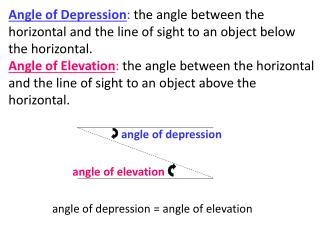
Angle Bisector • A ray that divides an angle into 2 congruent adjacent angles. BD is an angle bisector of <ABC. A D B C
Last example: Solve for x. * If they are congruent, set them equal to each other, then solve! x+40o x+40 = 3x-20 40 = 2x-20 60 = 2x 30 = x 3x-20o