Car Seat Education
220 likes | 220 Vues
St. Charles Medical Center's NICU Car Seat Challenge information


Car Seat Education
E N D
Presentation Transcript
Car Seat Education for Nurses Standardizing our practice and the information we provide to families…
Objectives: • Standardize how nurses perform car seat studies • Standardize the education/information we provide parents about car seat positioning • Provide recurrent education on proper car seat positioning
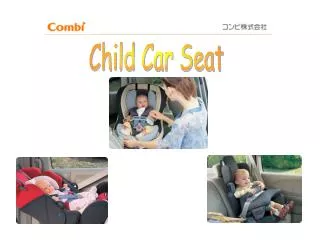
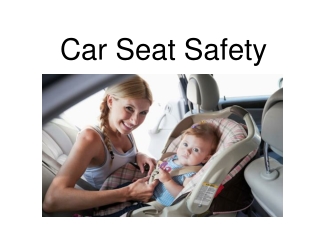
Car Seat Challenges • Performed on all patients born <37 weeks gestation, or per physician order • Performed for a minimum of one hour, or the length of the drive home from the hospital • Performed in the patient’s car seat, preferably with the parent’s present, to provide car seat education during the test
Documentation • Car Seat Challenge Forms must be completed for each test • Must document: • Brand make/model #/manufactured date • Car seats are only approved for 5 years from their manufactured date • Baseline vital signs • Vital signs every 15 minutes during test • Pass/Fail. If Fail, must include plan • Positioning aids used, if any, for supported positioning
Proper Positioning • You will need to move the straps to the lowest position that fits baby
Proper Positioning • Shoulder straps must be AT or BELOW the level of the baby’s shoulder
Proper Positioning • When buckled, the chest clip MUST be at midline across the chest bone.
Proper Positioning • The straps should be tight enough so that you are unable to pinch any excess
Proper Positioning • If the lower strap has optional slots, have the strap in the option closest to the back of the seat • The Baby’s bottom must be as far back as possible • Look for a gap between the patient and the strap • If there is a gap, the patient will likely slide and cause in-proper positioning of the shoulder straps
Proper Positioning • You are allowed ONE washcloth roll to help reduce the gap between the patient’s legs. • Place washcloth between legs 1 Roll
Proper Positioning • Observe for a gap between the patient’s hips and the car seat side
Proper Positioning • If a gap is noted, you are allowed ONE blanket roll (per side) to helps support the patient’s hips and minimize movement while maximizing stability
Proper Positioning • The blanket roll must be placed as low as possible to support the hips and subsequently the rolls will help support the head/neck
Proper Positioning • DO NOT USE after market head rests or other support devices! • If a support device comes with the car seat, it has been approved with crash testing and can be used • Car seat should be angled at 45 degrees
Proper Positioning • DO NOT use a neck roll or head roll supporter!
Proper Positioning • When placing patient’s in car seats, you want as LITTLE clothing as possible to enhance the effectiveness and tightness of the straps. • Layer blankets OVER the patient once in the seat to provide additional warmth • In our climate, this will be necessary during winter months. Educate parents to limit layers when possible.
Monitor Limits • Attach infant to the cardio respiratory monitor and pulse oximeter. Set alarms as follows or as ordered by the physician: • Apnea alarm at > 20 seconds • Bradycardia alarm at < 80 beats/minute • Low oxygen saturation alarm at 90%
Pass/Fail Determination • Terminate testing and assess as FAILED if infant experiences one or more of the following: • Apnea greater than 20 seconds • Bradycardia < 80 beats/minute for 10 second or more. Different criteria may be determined by provider when challenge is ordered. • Oxygen saturation levels less than 90% for 20 seconds or more • Any obvious signs of instability
Proper Positioning • If a patient fails a car seat challenge, or is too small to pass the challenge, a car bed is an option! • The same instructions and safety measures apply to car beds as regular safety seats~
Family Education Points • LEGALLY, nursing staff can NOT place the infant in the car seat prior to discharge. Parents, or care takers, MUST be the ones to secure the infant into the car seat • Nursing staff also MAY NOT place the car seat into the family’s vehicle, and into the base. Nursing staff must accompany the family out to the car and ensure the seat clicks into the base, but CAN NOT do the installation.
Family Education Points When riding in the car, be sure parents have the handle in the far back position, and that patients are rear facing~ A rear facing car seat should never be placed in the front passenger seat
Family Education Points • Travel time should be limited; if long trips are unavoidable, frequent rest stops should be built into the trip. • Close observation of the infant during transportation is encouraged. • Infants should never be left unattended in a car safety seat or car bed.