Understanding Intermolecular Forces: Differences Between Gases, Liquids, and Solids
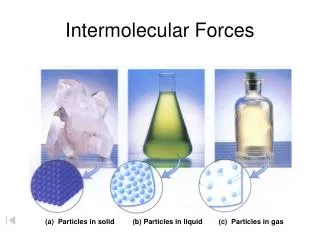
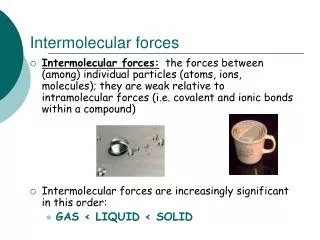
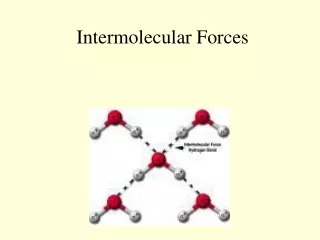
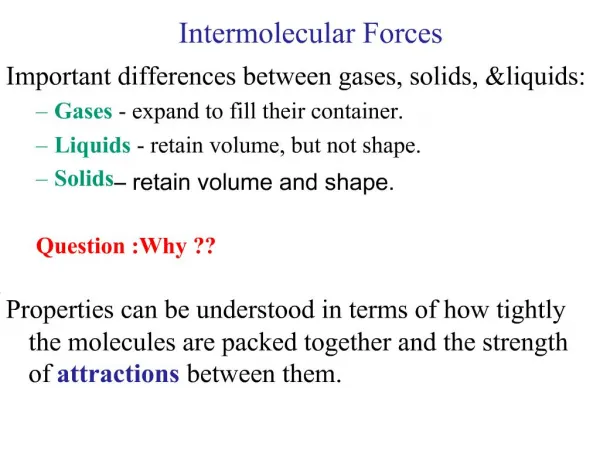
This overview explains the fundamental differences in behavior and properties of gases, liquids, and solids, emphasizing the role of intermolecular forces. Gases expand to fill any container, while liquids maintain a fixed volume but take the shape of their container. Solids retain both volume and shape due to tightly packed molecules. These properties can be understood through the arrangement of molecules and the strength of attractions between them, reflecting essential principles of physical chemistry.

Understanding Intermolecular Forces: Differences Between Gases, Liquids, and Solids
E N D
Presentation Transcript
1. Intermolecular Forces Important differences between gases, solids, &liquids: Gases - expand to fill their container. Liquids - retain volume, but not shape. Solids – retain volume and shape. Question :Why ?? Properties can be understood in terms of how tightly the molecules are packed together and the strength of attractions between them.