Solving Complex Java Puzzles with Evolutionary Algorithms: Insights and Applications
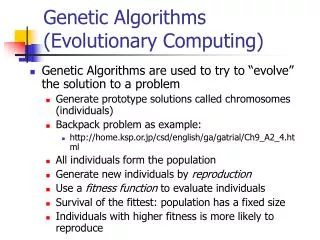
Join Bas W. Knopper, a Dutch Java developer and AI enthusiast, as he explores the fascinating world of Evolutionary Algorithms (EAs) in solving complex problems. This session will cover key concepts, practical use cases like the Travelling Salesman Problem, and demonstrate various EAs including Genetic Algorithms, Evolution Strategies, and more, all using plain Java code. Expect a hands-on approach with opportunities for questions and discussion throughout. Discover how EAs harness the principles of evolution to tackle intricate challenges and expand your programming toolbox!

Solving Complex Java Puzzles with Evolutionary Algorithms: Insights and Applications
E N D
Presentation Transcript
JavaOne [BOF2913] The key to solving complex Java puzzles Evolutionary Algorithms #javaone #EvolutionaryAlgorithms @BWKnopper
Let me introduce myself… • Bas W. Knopper • Dutch • Java Developer • NCIM (IT Services Company) • 9 years Java exp • AI enthousiast • Soft spot for Evolutionary Algorithms
Questions • A lot of groundto cover in 45 mins. • Askquestionsanytime! • But don’t take it personal if I have to move on… • We’lldiscussit over a <insertbeverage of choice>! • If time permits it • Question round at the end as well
What I would like to accomplish… • Interest • Understanding • How & when • Add to toolbox
NASA • Space Technology 5 mission • launched March 22, 2006, and completed June 20, 2006 • Three full service 25-kilogram-class spacecraft
NASA Continued • Needs even smaller antenna • Thatstillfunctionsaccordingtospec • Needfor solution that’snot easy to engineer • Sotheyusedan EA that made these:
Recap • Powerfulexample • Evolving object • First evolved object tofly in space • How?
Mutation Recombination
Mutation Recombination
From evolution to problem solving Environment Problem Individual Candidate Solution
Puzzle solving time! • More down to earth example • Travelling Salesman Problem
Travelling Salesman Problem • Given n cities • n = number of cities to visit • Find (optimal) route for visiting all cities • Visit every city only once • Return to origin city • Search space is huge • For 30 cities there are 30! 10^32 possible routes • That’s 100.000.000.000.000.000.000.000.000.000.000possible routes! Brute force mightnotbe the best solution…
Puzzle solving time! • More down to earth example • Travelling Salesman Problem • Use case to show you • Evolutionary Algorithm Design • Plain Java Code • Demo
Different EA’s • Genetic Algorithms (GA’s) • Evolution Strategies (ES’s) • Evolutionary Programming (EP) • Genetic Programming (GP) • All have the same basis
EA Algorithm (Pseudocode) INITIALISE population with random candidate solutions; EVALUATE each candidate; WHILE ( TERMINATION CONDITION is not satisfied ) { 1 SELECT parents; 2 RECOMBINE pairs of parents; 3 MUTATE the resulting offspring; 4 EVALUATE new candidates; 5 SELECT individuals for the next generation; }
EA Algorithm (Pseudocode) INITIALISE population with random candidate solutions; EVALUATE each candidate; WHILE ( TERMINATION CONDITION is not satisfied ) { 1 SELECT parents; 2 RECOMBINE pairs of parents; 3 MUTATE the resulting offspring; 4 EVALUATE new candidates; 5 SELECT individuals for the next generation; }
Candidate Solution - Representation • n = 6 • And base city 1 • Label cities 1,2,3,4,5,6 • Candidate Solution • Signifying the route • forn = 10
Mutation Recombination
EA Algorithm (Pseudocode) INITIALISE population with random candidate solutions; EVALUATE each candidate; WHILE ( TERMINATION CONDITION is not satisfied ) { 1 SELECT parents; 2 RECOMBINE pairs of parents; 3 MUTATE the resulting offspring; 4 EVALUATE new candidates; 5 SELECT individuals for the next generation; }
EA Algorithm (Pseudocode) INITIALISE population with random candidate solutions; EVALUATE each candidate; WHILE ( TERMINATION CONDITION is not satisfied ) { 1 SELECT parents; 2 RECOMBINE pairs of parents; 3 MUTATE the resulting offspring; 4 EVALUATE new candidates; 5 SELECT individuals for the next generation; }
Evaluation Function (Fitness Function) • Summeddistance: • d1,2 + d2,4 + … + d5,1 • Minimize!
/** * Calculates the total distance of the whole route and stores it as this * candidate solution's fitness */ privatevoidcalculateFitness() { /* initializetotaldistance */ doubletotalDistance = 0; /* * For all Cities in the route (except the last one) get the distance between this * City and the next and add it to the totalDistance */ for (int i = 0; i < route.size() - 1; i++) { City city = route.get(i); City nextCity = route.get(i + 1); totalDistance += city.calculateDistance(nextCity); } /* store totalDistance as this candidate solution's fitness */ this.fitness = totalDistance; }
/** * Calculates the total distance of the whole route and stores it as this * candidate solution's fitness */ privatevoidcalculateFitness() { /* initializetotaldistance */ doubletotalDistance = 0; /* * For all Cities in the route (except the last one) get the distance between this * City and the next and add it to the totalDistance */ for (int i = 0; i < route.size() - 1; i++) { City city = route.get(i); City nextCity = route.get(i + 1); totalDistance += city.calculateDistance(nextCity); } /* store totalDistance as this candidate solution's fitness */ this.fitness = totalDistance; }
/** * Calculates the total distance of the whole route and stores it as this * candidate solution's fitness */ privatevoidcalculateFitness() { /* initializetotaldistance */ doubletotalDistance = 0; /* * For all Cities in the route (except the last one) get the distance between this * City and the next and add it to the totalDistance */ for (int i = 0; i < route.size() - 1; i++) { City city = route.get(i); City nextCity = route.get(i + 1); totalDistance += city.calculateDistance(nextCity); } /* store totalDistance as this candidate solution's fitness */ this.fitness = totalDistance; }
/** * Calculates the total distance of the whole route and stores it as this * candidate solution's fitness */ privatevoidcalculateFitness() { /* initializetotaldistance */ doubletotalDistance = 0; /* * For all Cities in the route (except the last one) get the distance between this * City and the next and add it to the totalDistance */ for (int i = 0; i < route.size() - 1; i++) { City city = route.get(i); City nextCity = route.get(i + 1); totalDistance += city.calculateDistance(nextCity); } /* store totalDistance as this candidate solution's fitness */ this.fitness = totalDistance; }
/** * Calculates the total distance of the whole route and stores it as this * candidate solution's fitness */ privatevoidcalculateFitness() { /* initializetotaldistance */ doubletotalDistance = 0; /* * For all Cities in the route (except the last one) get the distance between this * City and the next and add it to the totalDistance */ for (int i = 0; i < route.size() - 1; i++) { City city = route.get(i); City nextCity = route.get(i + 1); totalDistance += city.calculateDistance(nextCity); } /* store totalDistance as this candidate solution's fitness */ this.fitness = totalDistance; }
/** * Calculates the total distance of the whole route and stores it as this * candidate solution's fitness */ privatevoidcalculateFitness() { /* initializetotaldistance */ doubletotalDistance = 0; /* * For all Cities in the route (except the last one) get the distance between this * City and the next and add it to the totalDistance */ for (int i = 0; i < route.size() - 1; i++) { City city = route.get(i); City nextCity = route.get(i + 1); totalDistance += city.calculateDistance(nextCity); } /* store totalDistance as this candidate solution's fitness */ this.fitness = totalDistance; }
/** * Calculates the total distance of the whole route and stores it as this * candidate solution's fitness */ privatevoidcalculateFitness() { /* initializetotaldistance */ doubletotalDistance = 0; /* * For all Cities in the route (except the last one) get the distance between this * City and the next and add it to the totalDistance */ for (int i = 0; i < route.size() - 1; i++) { City city = route.get(i); City nextCity = route.get(i + 1); totalDistance += city.calculateDistance(nextCity); } /* store totalDistance as this candidate solution's fitness */ this.fitness = totalDistance; }
EA Algorithm (Pseudocode) INITIALISE population with random candidate solutions; EVALUATE each candidate; WHILE ( TERMINATION CONDITION is not satisfied ) { 1 SELECT parents; 2 RECOMBINE pairs of parents; 3 MUTATE the resulting offspring; 4 EVALUATE new candidates; 5 SELECT individuals for the next generation; }
Termination Condition • EA’s are stochastic • May never find optimum • Combination • Max number of runs (generations) • Suretoterminate • Either: • Fitness threshold • Fitness improvementremainsunder a threshold over runs • Populationdiversitydropsunder a certainthreshold
EA Algorithm (Pseudocode) INITIALISE population with random candidate solutions; EVALUATE each candidate; WHILE ( TERMINATION CONDITION is not satisfied ) { 1 SELECT parents; 2 RECOMBINE pairs of parents; 3 MUTATE the resulting offspring; 4 EVALUATE new candidates; 5 SELECT individuals for the next generation; }
Parent Selection • Wherex is the number of parents: • Pickx best • Random x • Best x out of random y • In ourexample: • Best x out of random y
private List<CandidateSolution> parentSelection() { List<CandidateSolution> tempPopulation = newArrayList<CandidateSolution>(population); List<CandidateSolution> randomCandidates = newArrayList<CandidateSolution>(); /* createparent pool */ for(int i = 0; i < parentPoolSize; i++) { /* select a random candidate solution from the temp population */ intrandomlySelectedIndex = random.nextInt(tempPopulation.size()); CandidateSolutionrandomSelection = tempPopulation.get(randomlySelectedIndex); randomCandidates.add(randomSelection); /* delete the candidate from the temp population, so we can't pick it again */ tempPopulation.remove(randomlySelectedIndex); } /* Sort the population so that the best candidates are up front */ Collections.sort(randomCandidates); /* return a list with size parentSelectionSize with the best CandidateSolutions*/ returnrandomCandidates.subList(0, parentSelectionSize); }
private List<CandidateSolution> parentSelection() { List<CandidateSolution> tempPopulation = newArrayList<CandidateSolution>(population); List<CandidateSolution> randomCandidates = newArrayList<CandidateSolution>(); /* createparent pool */ for(int i = 0; i < parentPoolSize; i++) { /* select a random candidate solution from the temp population */ intrandomlySelectedIndex = random.nextInt(tempPopulation.size()); CandidateSolutionrandomSelection = tempPopulation.get(randomlySelectedIndex); randomCandidates.add(randomSelection); /* delete the candidate from the temp population, so we can't pick it again */ tempPopulation.remove(randomlySelectedIndex); } /* Sort the population so that the best candidates are up front */ Collections.sort(randomCandidates); /* return a list with size parentSelectionSize with the best CandidateSolutions*/ returnrandomCandidates.subList(0, parentSelectionSize); }
private List<CandidateSolution> parentSelection() { List<CandidateSolution> tempPopulation = newArrayList<CandidateSolution>(population); List<CandidateSolution> randomCandidates = newArrayList<CandidateSolution>(); /* createparent pool */ for(int i = 0; i < parentPoolSize; i++) { /* select a random candidate solution from the temp population */ intrandomlySelectedIndex = random.nextInt(tempPopulation.size()); CandidateSolutionrandomSelection = tempPopulation.get(randomlySelectedIndex); randomCandidates.add(randomSelection); /* delete the candidate from the temp population, so we can't pick it again */ tempPopulation.remove(randomlySelectedIndex); } /* Sort the population so that the best candidates are up front */ Collections.sort(randomCandidates); /* return a list with size parentSelectionSize with the best CandidateSolutions*/ returnrandomCandidates.subList(0, parentSelectionSize); }
private List<CandidateSolution> parentSelection() { List<CandidateSolution> tempPopulation = newArrayList<CandidateSolution>(population); List<CandidateSolution> randomCandidates = newArrayList<CandidateSolution>(); /* createparent pool */ for(int i = 0; i < parentPoolSize; i++) { /* select a random candidate solution from the temp population */ intrandomlySelectedIndex = random.nextInt(tempPopulation.size()); CandidateSolutionrandomSelection = tempPopulation.get(randomlySelectedIndex); randomCandidates.add(randomSelection); /* delete the candidate from the temp population, so we can't pick it again */ tempPopulation.remove(randomlySelectedIndex); } /* Sort the population so that the best candidates are up front */ Collections.sort(randomCandidates); /* return a list with size parentSelectionSize with the best CandidateSolutions*/ returnrandomCandidates.subList(0, parentSelectionSize); }
private List<CandidateSolution> parentSelection() { List<CandidateSolution> tempPopulation = newArrayList<CandidateSolution>(population); List<CandidateSolution> randomCandidates = newArrayList<CandidateSolution>(); /* createparent pool */ for(int i = 0; i < parentPoolSize; i++) { /* select a random candidate solution from the temp population */ intrandomlySelectedIndex = random.nextInt(tempPopulation.size()); CandidateSolutionrandomSelection = tempPopulation.get(randomlySelectedIndex); randomCandidates.add(randomSelection); /* delete the candidate from the temp population, so we can't pick it again */ tempPopulation.remove(randomlySelectedIndex); } /* Sort the population so that the best candidates are up front */ Collections.sort(randomCandidates); /* return a list with size parentSelectionSize with the best CandidateSolutions*/ returnrandomCandidates.subList(0, parentSelectionSize); }
private List<CandidateSolution> parentSelection() { List<CandidateSolution> tempPopulation = newArrayList<CandidateSolution>(population); List<CandidateSolution> randomCandidates = newArrayList<CandidateSolution>(); /* createparent pool */ for(int i = 0; i < parentPoolSize; i++) { /* select a random candidate solution from the temp population */ intrandomlySelectedIndex = random.nextInt(tempPopulation.size()); CandidateSolutionrandomSelection = tempPopulation.get(randomlySelectedIndex); randomCandidates.add(randomSelection); /* delete the candidate from the temp population, so we can't pick it again */ tempPopulation.remove(randomlySelectedIndex); } /* Sort the population so that the best candidates are up front */ Collections.sort(randomCandidates); /* return a list with size parentSelectionSize with the best CandidateSolutions*/ returnrandomCandidates.subList(0, parentSelectionSize); }
private List<CandidateSolution> parentSelection() { List<CandidateSolution> tempPopulation = newArrayList<CandidateSolution>(population); List<CandidateSolution> randomCandidates = newArrayList<CandidateSolution>(); /* createparent pool */ for(int i = 0; i < parentPoolSize; i++) { /* select a random candidate solution from the temp population */ intrandomlySelectedIndex = random.nextInt(tempPopulation.size()); CandidateSolutionrandomSelection = tempPopulation.get(randomlySelectedIndex); randomCandidates.add(randomSelection); /* delete the candidate from the temp population, so we can't pick it again */ tempPopulation.remove(randomlySelectedIndex); } /* Sort the population so that the best candidates are up front */ Collections.sort(randomCandidates); /* return a list with size parentSelectionSize with the best CandidateSolutions*/ returnrandomCandidates.subList(0, parentSelectionSize); }
private List<CandidateSolution> parentSelection() { List<CandidateSolution> tempPopulation = newArrayList<CandidateSolution>(population); List<CandidateSolution> randomCandidates = newArrayList<CandidateSolution>(); /* createparent pool */ for(int i = 0; i < parentPoolSize; i++) { /* select a random candidate solution from the temp population */ intrandomlySelectedIndex = random.nextInt(tempPopulation.size()); CandidateSolutionrandomSelection = tempPopulation.get(randomlySelectedIndex); randomCandidates.add(randomSelection); /* delete the candidate from the temp population, so we can't pick it again */ tempPopulation.remove(randomlySelectedIndex); } /* Sort the population so that the best candidates are up front */ Collections.sort(randomCandidates); /* return a list with size parentSelectionSize with the best CandidateSolutions*/ returnrandomCandidates.subList(0, parentSelectionSize); }
EA Algorithm (Pseudocode) INITIALISE population with random candidate solutions; EVALUATE each candidate; WHILE ( TERMINATION CONDITION is not satisfied ) { 1 SELECT parents; 2 RECOMBINE pairs of parents; 3 MUTATE the resulting offspring; 4 EVALUATE new candidates; 5 SELECT individuals for the next generation; }
Recombination • In ourexample: • half-half does notwork • “Cut-and-crossfill”
public List<CandidateSolution> recombine(CandidateSolutionotherParent) { /* get routes of both parents */ List<City> parentRoute1 = getRoute(); List<City> parentRoute2 = otherParent.getRoute(); /* initialize the routes for the children */ List<City> childRoute1 = newArrayList<City>(); List<City> childRoute2 = newArrayList<City>(); /* randomize cutIndex for "cross-and-fill point" */ intcutIndex = new Random().nextInt(parentRoute1.size()); /* copy the first part of the parents cut into the children */ childRoute1.addAll(parentRoute1.subList(0, cutIndex)); childRoute2.addAll(parentRoute2.subList(0, cutIndex)); /* performcrossfillforbothchildren */ crossFill(childRoute1, parentRoute2, cutIndex); crossFill(childRoute2, parentRoute1, cutIndex); /* create new children using the new children routes */ CandidateSolution child1 = newCandidateSolution(childRoute1); CandidateSolution child2 = newCandidateSolution(childRoute2); /* put the children in a list and return it (omitted for layout reasons) */ }
public List<CandidateSolution> recombine(CandidateSolutionotherParent) { /* get routes of both parents */ List<City> parentRoute1 = getRoute(); List<City> parentRoute2 = otherParent.getRoute(); /* initialize the routes for the children */ List<City> childRoute1 = newArrayList<City>(); List<City> childRoute2 = newArrayList<City>(); /* randomize cutIndex for "cross-and-fill point" */ intcutIndex = new Random().nextInt(parentRoute1.size()); /* copy the first part of the parents cut into the children */ childRoute1.addAll(parentRoute1.subList(0, cutIndex)); childRoute2.addAll(parentRoute2.subList(0, cutIndex)); /* performcrossfillforbothchildren */ crossFill(childRoute1, parentRoute2, cutIndex); crossFill(childRoute2, parentRoute1, cutIndex); /* create new children using the new children routes */ CandidateSolution child1 = newCandidateSolution(childRoute1); CandidateSolution child2 = newCandidateSolution(childRoute2); /* put the children in a list and return it (omitted for layout reasons) */ }
public List<CandidateSolution> recombine(CandidateSolutionotherParent) { /* get routes of both parents */ List<City> parentRoute1 = getRoute(); List<City> parentRoute2 = otherParent.getRoute(); /* initialize the routes for the children */ List<City> childRoute1 = newArrayList<City>(); List<City> childRoute2 = newArrayList<City>(); /* randomize cutIndex for "cross-and-fill point" */ intcutIndex = new Random().nextInt(parentRoute1.size()); /* copy the first part of the parents cut into the children */ childRoute1.addAll(parentRoute1.subList(0, cutIndex)); childRoute2.addAll(parentRoute2.subList(0, cutIndex)); /* performcrossfillforbothchildren */ crossFill(childRoute1, parentRoute2, cutIndex); crossFill(childRoute2, parentRoute1, cutIndex); /* create new children using the new children routes */ CandidateSolution child1 = newCandidateSolution(childRoute1); CandidateSolution child2 = newCandidateSolution(childRoute2); /* put the children in a list and return it (omitted for layout reasons) */ }
public List<CandidateSolution> recombine(CandidateSolutionotherParent) { /* get routes of both parents */ List<City> parentRoute1 = getRoute(); List<City> parentRoute2 = otherParent.getRoute(); /* initialize the routes for the children */ List<City> childRoute1 = newArrayList<City>(); List<City> childRoute2 = newArrayList<City>(); /* randomize cutIndex for "cross-and-fill point" */ intcutIndex = new Random().nextInt(parentRoute1.size()); /* copy the first part of the parents cut into the children */ childRoute1.addAll(parentRoute1.subList(0, cutIndex)); childRoute2.addAll(parentRoute2.subList(0, cutIndex)); /* performcrossfillforbothchildren */ crossFill(childRoute1, parentRoute2, cutIndex); crossFill(childRoute2, parentRoute1, cutIndex); /* create new children using the new children routes */ CandidateSolution child1 = newCandidateSolution(childRoute1); CandidateSolution child2 = newCandidateSolution(childRoute2); /* put the children in a list and return it (omitted for layout reasons) */ }
public List<CandidateSolution> recombine(CandidateSolutionotherParent) { /* get routes of both parents */ List<City> parentRoute1 = getRoute(); List<City> parentRoute2 = otherParent.getRoute(); /* initialize the routes for the children */ List<City> childRoute1 = newArrayList<City>(); List<City> childRoute2 = newArrayList<City>(); /* randomize cutIndex for "cross-and-fill point" */ intcutIndex = new Random().nextInt(parentRoute1.size()); /* copy the first part of the parents cut into the children */ childRoute1.addAll(parentRoute1.subList(0, cutIndex)); childRoute2.addAll(parentRoute2.subList(0, cutIndex)); /* performcrossfillforbothchildren */ crossFill(childRoute1, parentRoute2, cutIndex); crossFill(childRoute2, parentRoute1, cutIndex); /* create new children using the new children routes */ CandidateSolution child1 = newCandidateSolution(childRoute1); CandidateSolution child2 = newCandidateSolution(childRoute2); /* put the children in a list and return it (omitted for layout reasons) */ }
public List<CandidateSolution> recombine(CandidateSolutionotherParent) { /* get routes of both parents */ List<City> parentRoute1 = getRoute(); List<City> parentRoute2 = otherParent.getRoute(); /* initialize the routes for the children */ List<City> childRoute1 = newArrayList<City>(); List<City> childRoute2 = newArrayList<City>(); /* randomize cutIndex for "cross-and-fill point" */ intcutIndex = new Random().nextInt(parentRoute1.size()); /* copy the first part of the parents cut into the children */ childRoute1.addAll(parentRoute1.subList(0, cutIndex)); childRoute2.addAll(parentRoute2.subList(0, cutIndex)); /* performcrossfillforbothchildren */ crossFill(childRoute1, parentRoute2, cutIndex); crossFill(childRoute2, parentRoute1, cutIndex); /* create new children using the new children routes */ CandidateSolution child1 = newCandidateSolution(childRoute1); CandidateSolution child2 = newCandidateSolution(childRoute2); /* put the children in a list and return it (omitted for layout reasons) */ }