Enhancing Hybrid Course Development Through Collaborative Strategies
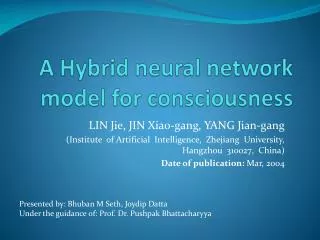
This presentation aims to emphasize the importance of collaboration in developing hybrid courses. Participants will learn to recognize when collaboration is essential, review the structure and flow of collaborative processes, and identify necessary skills to navigate breakdowns in collaboration. The session highlights the evolving landscape of the CTE classroom, accentuating the significance of professional development, teamwork, and problem-based learning in modern education. Join us as we explore effective strategies to enhance teaching and learning through collaboration.

Enhancing Hybrid Course Development Through Collaborative Strategies
E N D
Presentation Transcript
PLC Model for Hybrid Course Development Objectives for this presentation: Recognize when collaboration is needed; review the structure and flow of collaboration; identify skills to use when the collaborative process breaks down Angela Durant-Tyson Instructional Coordinator
What does the CTE classroom of the early 20th Century . . .
. .have in common with the CTE classroom of the early 21st century?
Innovation & Change ! • Access to web-based content /curriculum/collaborators • Increased Emphasis on Relationships, Partnering, and Soft Skills • Problems-Based Learning • Collaborative Approaches • Small Learning Communities
But, in the “Race to keep Pace” with today’s technology and digital learners . . . .
And all this technology sometimes seems to just ADD to My WORK !
Why focus on Teacher Professional Development? Research shows that each dollar spent on recruiting high-quality teachers and deepening their knowledge and skills nets greater gains in student learning than any other use of an education dollar. (Ferguson, Greenwald, Hedges, & Laine as cited in Darling-Hammond, 1997)
In a “learning by doing” environment. . . effective teachers are alwaysmodeling theskills they expect learners to master
SKILLS rated MOST IMPORTANT • by over 400 U.S. employers : • Teamwork / Collaboration • Professionalism / Work Ethic • Oral and Written Communication • Information Technology Application • Higher-Order Thinking / Problem Solving • source: Southern Regional Education Board
The Professional Learning Community • Work collaboratively • Focus on Learning, not Teaching • Hold ourselves accountable for results
Professional Development Facilitated through PLCs Not an event or series of events but a Process of Continuous Improvement ,
Evidence of Higher-Order Thinking • Peersexchange ideas • Participants are responsible for their own learning • Social interaction and acceptance is generally high • Self-confidence and personal satisfaction increases • Learning becomes needs, interest, and curiosity-based • Relevant discussions on important issues are the norm
Empower Leadership Teams Top-down support for bottom-up success
To train 150 teachers to utilize Blackboard LMS grade book and create at least one hybrid/blended course
https://www.qualitymatters.org/ A national benchmark for online course design Quality Matters (QM) is a leader in quality assurance for online education and has received national recognition for its peer-based approach to continuous improvement in online education and student learning.
The Process… • Quality Matters Certification • Identify Power Users • Create Training Materials • Train the Trainer • Logistics and Implementation • Feedback
“In a time of accelerating change it is the learners who inherit the future. The learned usually find themselves equipped to live in a world that no longer exists.” Eric Hoffer
Address different learning styles • Demonstrate first, then let instructors practice • Develop training material • Run-through facilitation skills • Set an action plan and follow up
Training Schedule • June and July • Two trainings simultaneously 8 am to 4 pm each day
120 Teachers Trained • 56 Received Online Teacher Certification • 69 Received APPQMR Certification
Warm: Best PD Ever!! Why don’t you all do this more often? Cool: Have the QM training after the Boot Camp, so we have a chance to modify our courses. Having it on Friday made us realize what needed to be corrected and made for more work.
Objectives for this presentation: Recognize when collaboration is needed; review the structure and flow of collaboration; identify skills to use when the collaborative process breaks down Questions?
Objectives for this presentation: Recognize when collaboration is needed; review the structure and flow of collaboration; identify skills to use when the collaborative process breaks down Angela Durant-Tyson Instructional Coordinator Email: angela.duranttyson@tulsatech.edu