Understanding TCP/IP: The Core Protocols for Internet Communication
TCP, or Transmission Control Protocol, is crucial for ensuring data integrity during online communication. It functions alongside IP (Internet Protocol) as part of the comprehensive TCP/IP suite. While TCP guarantees that data is accurately transmitted from the client to the server, handling errors and resending lost packets, IP assigns unique addresses to every device on a network. With the transition from IPv4 to IPv6 due to the exhaustion of available IPv4 addresses, understanding these protocols is vital for anyone involved in network management or internet technologies.

Understanding TCP/IP: The Core Protocols for Internet Communication
E N D
Presentation Transcript
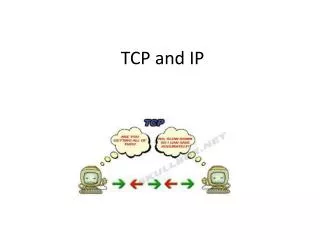
TCP • A network term. It stands for Transmission Control Protocol. • It is important because it is one half of the network protocol used to control data on the Internet. The other half is IP. • The complete network protocol is called TCP/IP • TCP is responsible for checking that data has been delivered correctly from your computer (the client) to another computer (the server). If data is lost, then TCP requests that the data is re-sent.
IP • Unique address given to every device running on a network • i.e. 198.162.001.002 • Static IP address • Dynamic IP address assigned by DHCP server
IPV4 Verus IPV6 • What is the difference? • IPV4 is running out of numbers • IPV6 is running in parallel