The Role of Yeast and Gluten in Bread Making: Processes and Techniques Explained
Discover the essential roles of yeast and gluten in bread making. Gluten provides elasticity and strength to dough, while yeast is crucial for rising and creating a porous texture. Learn about the hydrating process of dry active yeast with warm water to encourage the right level of carbon dioxide. Explore the four main processes involved in crafting yeast dough: mixing, kneading, shaping, and baking. Understand how these elements work together to create bread with a delightful texture and flavor.

The Role of Yeast and Gluten in Bread Making: Processes and Techniques Explained
E N D
Presentation Transcript
What part does each play in the making of bread? • GLUTEN – provides dough with elasticity and strength. • YEAST – makes dough rise and gives it it’s porous texture Under developed gluten Developed gluten
HYDRATION To Add water DEHYDRATION To remove water Define
Hydration of dry active yeast • Dry active yeast must be hydrated with warm water, not too hot. • The proper temperature helps the yeast give off the correct amount of carbon dioxide. 85° Too Cold F.Y.I. If the water is too hot, the balloon doesn’t inflate at all!
In order to grow yeast needs: • Moisture -- Milk or water • Warmth -- @ 110° F • Food -- sugar OR
Sugar Provides food for the yeast to grow. Salt Controls the growth of the yeast. How does each affect the growth of yeast?
Four main processes for making yeast dough: • MIXING • KNEADING & RISING • SHAPING & RISING • BAKING mixing Kneading and rising
Shaping dough Baking
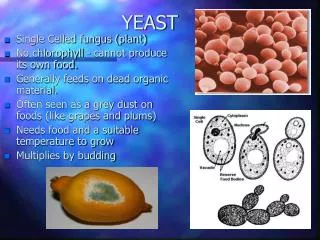
Yeast Growth • As yeast grows CARBON DIOXIDE develops causing the dough to rise. Once multiplying begins
How do you know the bread has risen enough? • Should double in size • Push two fingers into the dough, if the holes remain but the top stays smooth and satiny.
Why is the milk scalded then cooled? • To destroy enzymes that make dough sticky • To allow yeast to grow at optimum temp. • Too hot of temperature will kill the yeast!
What does kneading do? • Develops the gluten so the dough will stretch and expand. 1 4 How to knead 2 3
Appearance Uniform golden brown Smooth rounded top Creamy white inside Crumb Cut surface is moist and springy to touch When judging bread look for:
Texture Fine grain Porous Flavor Sweet, nut-like wheaty taste Continue …
Ways to shape dough Cloverleaf Rolls Crescent Rolls Parker House Rolls
Tea rings Pretzels Snails Twists Cinnamon Rolls