Optimizing Performance_ Service Level Objectives (SLOs), Exception Handling in PHP, and AWS Lambda with Node
0 likes | 12 Vues
his guide explores three key concepts that empower you to achieve these goals:<br>Service Level Objectives (SLOs): Defining the standards of behaviour that are expected from the employees. <br> Exception Handling in PHP: Proper handling of the errors in an application to make it strong. <br>Target public Developing Serverless Applications with AWS Lambda and Node. js: Utility of serverless architecture for purposes of scalability and rationality. <br>

Optimizing Performance_ Service Level Objectives (SLOs), Exception Handling in PHP, and AWS Lambda with Node
E N D
Presentation Transcript
Optimizing Performance: Service Level Objectives (SLOs), Exception Handling in PHP, and AWS Lambda with Node.js The world of software is ever-evolving and therefore selecting the best solution for an application which will run efficiently and provide the best experience to users is another unarguable factor. This guide explores three key concepts that empower you to achieve these goals: Service Level Objectives (SLOs): Defining the standards of behaviour that are expected from the employees. Exception Handling in PHP: Proper handling of the errors in an application to make it strong. Target public Developing Serverless Applications with AWS Lambda and Node. js: Utility of serverless architecture for purposes of scalability and rationality. Understanding and applying these ideas will help you create great applications that work, are dependable, and can meet the challenges when needed. Setting the Bar: Understanding Service Level Objectives (SLOs) Setting the Bar: In this topic, the following have been defined and explained: What are SLOs? Service Level Objectives (SLOs) are agreements that state the quality that a client will receive from a service. They set the quantifiable targets for the appropriate indicators in virtual organization and they also act as a communication link between development, operations and the stakeholders.Here's a breakdown of what service level objective examples look like: Metrics: Metrics that are commonly used and include; availability, latency and error rate among other factors. Common metrics for SLOs include: Availability: The availability of a service to the user, often indicated as the percentage of time a service is operational (e. g. , 99. 9%). Latency: The amount of time that is needed by a service to provide a response to a request made by a particular user ( for instance, a website page loading time to be below 3 seconds). Error Rate: The fraction of requests that cause failures or other forms of negative outcomes ( e. g. , an application’s error fraction < 1%). Targets: Quantitative goal of each of the metrics which are developed within the SLO. Timeframe: The time span for which the SLO is made (for instance, monthly, quarterly).
Benefits of Implementing SLOs Clear Performance Expectations: SLOs introduce a common set of anticipated outcomes between different groups of employees, promoting cooperation and guaranteeing that all personnel is moving in the same direction. Proactive Monitoring: To sum it up, through determination and measurement of SLOs, you are able to recognize the problems which have not less than a great potential to become acute in the frame of using the software. This lets you proactively deal with the problem and reduce risk of time being wasted or function decline. Data-Driven Decision Making: In this case, SLOs give a structure on how performance improvement activities and resource deployment can be supported by data. The evaluation of SLO information provides a base upon which decisions about resource allocation for upkeep and enhancement of the application can be made as a way of determining their usefulness to the user. Example SLO: Service: E-commerce product page Metric: Page Load Time SLO: The target is to have the product page fully load in less than 3 seconds for 99% of the users for a one month period. This way, by tracking the timeframe and notifying on a moment when it’s less favorable than the defined SLO, you can guarantee a good experience to your application’s visitors and then take the corrective measures needed. This could include fine-tuning the SQL queries, storing the commonly retrieved information in the cache or densifying your tier to meet the influx of traffic. Safeguarding Your PHP Application: Exception Handling Finally I can mention that exception is one of the basic PHP catch exception concepts that provide a way to handle different errors and avoid the crash of the application. If while the execution of a program an error or any condition that the program was not designed to handle is encountered, an exception is thrown. With exception handling one can transform such exceptions and learn how to handle them more effectively by standardizing the way they can be dealt with. The basic structure for exception handling in PHP involves three keywords: try: This block of the code contains that part of the code which can result in an exception being thrown.
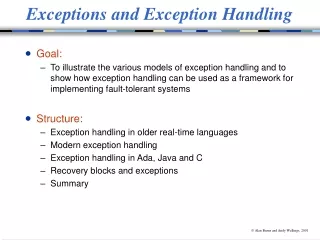
catch: This block describes what you want to do if exception will arise during the execution of code from the previous block. There is also the possibility of determining the type of the exception that has to be caught, and code written in the catches section will be executed to handle the error. This could entail writing the error to a log for diagnostic purposes, displaying a user-friendly message to the user or even, trying to correct from the error. finally (optional): This block will execute always whether there is an exception or not an exception. It’s typically employed to free up resources such as a database connection or execute arbitrary clean-up as part of the application even if an error has occurred. This keeps the state of your application as clean as possible hence no resource leakages are experienced. Here's a simple example of exception handling in PHP:Here's a simple example of exception handling in PHP: PHP try { You may use the variable and constants that contain the following code that might throw an exception The symbolic constant $result: $result = 10 / 0; this will raise Arabiti exception at runtime. Try and catch block where the try block contains a divide operation and the catch block catches an Arithmetic Exception. echo "Error: Nearly every one of them has experienced the horror of division by zero! // Write the error for debugging. error_log($e->getMessage()); } finally { StM1STP_Ans_2 // Close the database connection (if applicable) $connection = null; } By implementing proper exception handling, you can: Improve Application Stability: Error handling allows an application to carry out its function while maintaining high usability when issues arises so as not to crash the application. This makes the user to have confidence with the application and minimize the situations when they meet with frustrating results of the application. Enhanced Error Reporting: Catch blocks let you aid the user with helpful error messages, or (in the case where an error occurs) assist in registering the error. Building Your First Node.js Lambda Function Here's a step-by-step guide to creating a simple aws lambda node js example: 1. Node.js and Serverless Framework Setup:
Ensure you have Node.js and npm (Node Package Manager) installed on your development machine. Install the Serverless Framework globally using npm install -g serverless. The Serverless Framework simplifies deploying and managing serverless applications on AWS. 2. Project Initialization: ○ Create a new project directory and navigate to it using your terminal. ○ Initialize a new serverless project using serverless. This will create a basic project structure with essential configuration files. 3. Define Your Lambda Function: ○ Within your project directory, create a JavaScript file (e.g., index.js) to house your Lambda function code. ○ Here's an example of a Node.js function that returns a simple greeting message: ○ ○ JavaScript exports.handler = async (event) => { const name = event.queryStringParameters ? event.queryStringParameters.name : 'World'; const message = `Hello, ${name}!`; return { statusCode: 200, body: JSON.stringify(message), }; }; Use code with caution. content_copy * This function accepts an event object that might contain query string parameters. It extracts the name parameter (if provided) and constructs a greeting message. Finally, it returns a response object with a status code of 200 and the message body. 4. Deploying Your Function: ○ In your terminal, navigate to your project directory and run serverless deploy. ○ This command will package your code, create a Lambda function in your AWS account, and deploy it. The Serverless Framework will guide you through any necessary authentication steps to connect to your AWS account. 5. Invoking Your Function: ○ Once deployed, the Serverless Framework will provide you with an endpoint URL for your Lambda function. ○ You can use tools like curl or Postman to send HTTP requests to this URL and invoke your function. This is a basic example, but it demonstrates the core concepts of building and deploying Node.js Lambda functions. You can leverage libraries and frameworks like Express.js or Koa.js to build more complex web APIs or functionalities within your Lambda functions.