Fixed Main Engine vs. Gimbal-Mounted Systems: An Evaluation of Alternatives for Current Space Missions
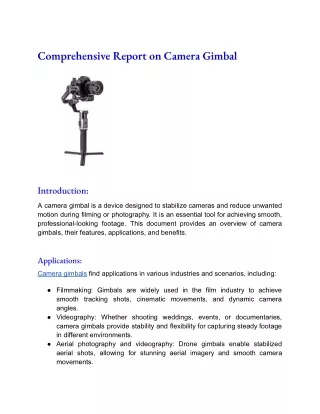
This document examines the advantages and disadvantages of utilizing fixed main engines compared to gimbal-mounted engines in contemporary space missions. It details the specifications and requirements for gimbaled thrust systems, including mass impacts and additional costs associated with actuator power and controllers. The analysis includes recommendations based on performance, reliability, and complexity. With a focus on translunar phases, this evaluation aids in optimizing engine choices to minimize costs while maintaining effective attitude control.

Fixed Main Engine vs. Gimbal-Mounted Systems: An Evaluation of Alternatives for Current Space Missions
E N D
Presentation Transcript
Fixed Main Engine versus Gimbal Mounted Alternative Current Tasks: Gimbal Mount Alternative Separation Landing Alternative Minimizing Thruster Cost 2/19/09 Kris Ezra Attitude Group Translunar Phase 1
Gimbal System Explanation 0.3858 m • Advantages: Thrust vectoring implies possible decrease in attitude control prop • Disadvantages: Extra complexity and mass Gimbal Mount Specifications: • Approximate mass of 6 kg • Angular maximum motion of 20º • 3 Axis Gimbal • Relatively low complexity • Design, build, and test in house <$1,000 1.06 m 20º Kris Ezra Attitude Group Translunar Phase
Comparison of Alternatives • Recommendations: • Because of limited use of gimbaled main engine in other phases due to thrust magnitude, recommend fixed main engine • Gimbaled Thrust Additional Costs: • 17.638 kg mass increase • < $1,000 Design, build, test cost • Additional power sufficient to run 3 actuators • Gimbal controllers (mass, power, cost yet unknown) Lowest Total Mass Penalty: Attitude Thrusters: 6.287 kg Gimbaled Engine: 23.925 kg Kris Ezra Attitude Group Translunar Phase
Mass Calculation Methods • Method 1: • m is the time averaged mass • M is the induced moment • g is the gravitation constant of 9.80665 m/s^2 • Isp is the specific impulse of H202 • L is the distance from the thruster to the center of mass • Method 2: • M is the total propellant mass • D is mission duration in days • n is the average number of desaturation maneuvers per day • J is the maximum torque provided by reaction wheels (Nm) • T is an estimate of the specific thrust of the propellant for a given engine (N/kg) • L is the moment arm of the desaturation device (m) Kris Ezra Attitude Group Translunar Phase
Specific Data Kris Ezra Attitude Group Translunar Phase
Determination of Specific Thrust Obtained and modified from http://www.peroxidepropulsion.com/article/5 Kris Ezra Attitude Group Translunar Phase
Determination of Specific Thrust Obtained and modified from http://www.peroxidepropulsion.com/article/5 Kris Ezra Attitude Group Translunar Phase
References Bengtsson, Erik. “Peroxide Propulsion” Accessed 18 Feb 2009, URL: http://www.peroxidepropulsion.com/ Vaughan, David A., “Gimbal Development for the NEXT Ion Propulsion System” AIAA Joint Propulsion Conference & Exhibit, 2005. Lukasak, J. “Propellant Requirements: Attitude Control Thrusters with Low Thrust Orbit Trajectories,” 12 Feb. 2009. Erson, B. “Attitude Control Systems,” 19 Feb. 2009. Kris Ezra Attitude