Download
1 / 11
110 likes | 243 Vues
The Aquatic GAP Program at Kansas State University aims to enhance the understanding of aquatic ecosystems through comprehensive mapping and analysis. The program establishes methods for classifying aquatic habitats, identifies at-risk systems, and seeks opportunities for cooperative conservation. It utilizes data layers for species distributions and habitat affinities, integrating information from various agencies. This initiative supports priority watershed identification, ecological research, and the Clean Water Act, ultimately delivering a user-friendly website for easy access to valuable resources.

E N D
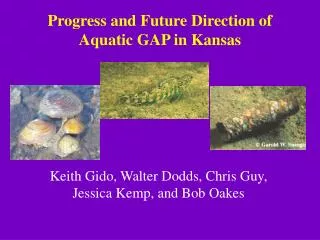
The Gap Analysis Program http://www.gap.uidaho.edu/gap Aquatic GAP program in Kansas Keith Gido, Walter Dodds, Chris Guy, Jessica Kemp, and Bob Oakes Kansas State University
Objectives of Aquatic GAP • Provide a framework for mapping and analyzing aquatic ecosystems • Develop methods for categorizing aquatic habitats based on watershed and valley segment characteristics • Identify at-risk systems and elements • Identify opportunities for cooperative conservation and restoration • Build on existing cooperator activities and serve as an integrating program
Basin wide Inventory and Mapping for the Missouri River
Valley Segment Datalayer Species Distributions by Valley Segments Habitat Affinity Database Land use Water Quality Predicted Species Distributions by Valley Segments Protection Level of Valley Segments General Methods
National Hydrography Dataset (NHD) Valley Segment Classification
National Hydrography Dataset (NHD) Valley Segment Classification
National Hydrography Dataset (NHD) Valley Segment Classification • Temperature • Stream size • Permanence of flow • Gradient • Geology • Floodplain reach
National Hydrography Dataset (NHD) Species Distributions • KDWP Stream Survey • Museum Records • KDH&E Surveys • Misc. Surveys by State, Federal, and Academic Institutions
Recorded occurrences of spotted bass + Valley segment characteristics = Predicted occurrences of spotted bass Building a relational database between valley segments and biotic elements
Potential Uses of GAP in Kansas • Identify priority watersheds • Clean Water Act • Review of impact studies • Stream lease program • Education • Ecological research • Integration of physical, chemical, and biotic data from various agencies and institutions
Final Product • User-friendly web site for easy access