The Impact of Protestantism on Church-State Separation and Societal Secularization
The Protestant Reformation fundamentally influenced the separation of Church and State, promoting the secularization of society. Both Protestants and Catholics began to recognize the link between religious heresy and economic turmoil. Protestant doctrines, particularly the priesthood of all believers, raised the status of laypeople and enriched city treasuries. Calvinism introduced principles such as predestination and a strong work ethic, shaping various branches like Presbyterians and Puritans. The Radical Reformation, with groups like Anabaptists, significantly advocated for church-state separation, facing severe backlash from contemporary authorities.

The Impact of Protestantism on Church-State Separation and Societal Secularization
E N D
Presentation Transcript
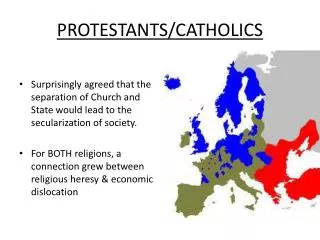
PROTESTANTS/CATHOLICS • Surprisingly agreed that the separation of Church and State would lead to the secularization of society. • For BOTH religions, a connection grew between religious heresy & economic dislocation
Lutherans - Protestants • Protestant doctrines of the priesthood of all believers raises religious status of laypeople and provides greater income for city treasuries • Tried to balance popular religious ideas with the aims of political authority
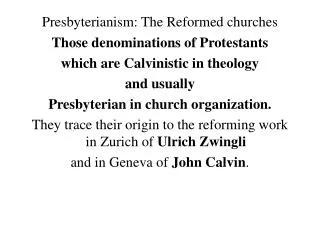
Calvininsts • Predestination- God has already decided who would be saved/damned • God is total power, humanity is total weakness • Instead of focusing on the negative legacy of this, Calvinists believed in the redemptive work of Christ • An energizing dynamic, becomes focused on work-ethic • The most widely exported Reformation religion around the world
Legacy of Calvin/Calvinism Becomes model for: • Presbyterians in Scotland • Huguenots in France • Puritan Churches in England • Puritan Churches in New England
RADICAL REFORMATION • Rejected ideas that Church and State need to be united, sought to create a voluntary community of believers • Groups include Anabaptists, and later on Quakers, Baptists and Congregationalists • Directly tied to the SEPARATION of Church and State in the U.S.A. today • Severely condemned/murdered by Catholics, Protestants & Politicians (Germans/Swiss)