Download
1 / 21
210 likes | 336 Vues
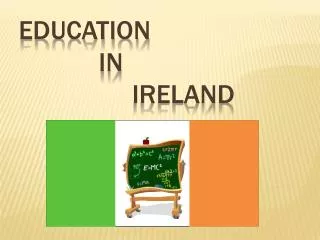
This document outlines the initiatives and frameworks guiding the Further Education (FE) sector in Ireland. It discusses the National Skills Strategy, the role of the Department of Education, and the National Qualification Framework. Additionally, it addresses work placements as part of the FE learner experience, emphasizing their importance for early school leavers, second-chance learners, and unemployed individuals. The document highlights national policies and international commitments, including the EU's Lisbon Agenda and Copenhagen Declaration, aiming to foster a skilled labor force through high-quality education and industry links.

E N D
Ger Melia National Manager for Industry and International Links Further Education Sector Department of Education and Science June 2007 gmelia@indigo.ie Further Education - Ireland
WORK PLACEMENTS INTERNATIONAL CONTEXT NATIONAL CONTEXT • National Skills Strategy • DES/FE Mission • National Qualification Framework • Further Education Programmes/Initiatives
Further Education - Ireland Provide high-quality education which will: Enable individuals to achieve their full potential and to participate fully as members of society Contribute to Ireland’s social, cultural and economic development.
FE LEARNERS • Early school leavers • Second-chance learners (left school without qualifications) • Unemployed people and other recipients of welfare benefits • Learners who require a stepping stone to industry or to third level
INTERNATIONAL • EU • Lisbon Agenda • Copenhagen Declaration • DGVET Conferences • Munich (ECVET/EQF) • OECD
NATIONAL - Education • Education Act 1998 • Qualifications Education and training 1999 • 2001 – NQAI/HETAC/FETAC established • 2003 – NQAI launched the National qualifications framework (10 levels) • White Paper on Adult Education (2000) • Vocational Education (Amendment) Act 2001 • Education for Persons with SN (2004 Act) • Disability Act (2005)
NATIONAL – Labour/S.W. • Unemployment - 4% • 72% of long term unemployed < upper secondary • 36,000 are long term unemployed ____________________________________________ • 2002 - Taskforce on Lifelong Learning • 2004 - Workplace Strategy • 2006 - Towards 2016 2007 - Tomorrow’s Skills - Towards a National Skills Strategy – 5th of 5 main reports - EGFSN
FE ISSUES • FE Status and No Capital Funding • Complexity/Compartmentalisation • Funding for Learners • Create Formal Education/Industry Links • Respond to National Skills Strategy • Funding • Up-skill/re-skill mature learners (LLL) • Respond to migrants and low skilled learners
FRAMEWORK - LEVELS 1-6 • Providers • Vocational Education Committees (33) - FE • FÁS – National Training/Employment Authority • Fáilte Ireland (Tourism Training) • Teagasc (Agricultural Training) • Bord Iascaigh Mhara (Fisheries Training) • Institutes of Technology and Universities • Awarding Body - FETAC
Further /Adult Education Full Time Programmes • Youthreach – 3,200 students (ages 15 -20) • Early school leavers • Senior Traveller Training – 1,000 (15+) • Second chance education mainly for Travellers • VTOS – 5,639 (21+ and 6 months unemployed) Social a programme for social welfare recipients • Post-Leaving Certificate Courses – 30,000+ (17+) • Programme for students at FETAC levels 5 and 6
Adult and Further Education Provision – Part time Adult Literacy – (35,000) - FETAC level 1-3 Adults with literacy and numeracy needs 10,000 are English language learners Community Education – 100,000 Adults who wish to re-enter education in a non-formal setting Back to Education Initiative – 7,000 places FETAC levels 3-5 (flexible modular basis)
Co-Funding Measures co-funded by European Structural Fund and DES from 2007-2013: • BTEI • Adult Literacy • Youthreach • Travellers Notes: Disability funding Recommendations re low skills in skills strategy
WORK PLACEMENTS • National • Mandatory at NQF level 5 and 6 – Focused on Skills • Optional at level 4 • < level 4 – Focus - Personal Development/Literacy • Usually 2 weeks p.a. (exception – childcare) • Transnational • FETAC Level 6 - 17 weeks (DES/ESF funded) • Leargas – National Agency (LLL Programme)
Work Placements in Ireland Level 5 and 6* (DES Funded) • Until 2000 – Level 5 and 6 received ESF funding at levels 5 and 6 • Organised by local providers (VEC) • Usually organised with local employers • FETAC Minor award • Linked to Full award • DES funds programme that leads to full award Note: Levels 5and 6 (NQF) are equivalent to 4 and 5(EQF).
Transnational Work Placements DES Initiative (1997-2003) • National Management (DES initiative) • National Guidelines/contracts/insurance • National Support Office • National In-service • Strategic Advice/Recommendations to DES • Strategic links to providers, industry, international • Regional/Local Co-ordination/Implementation Funded through National Agency
PLC • Industry Linked – Levels 5-6 • Business and secretarial skills • Computer Studies • Art, Craft and design • Childcare and Community Care • Tourism, hotel and catering • Horticulture
Structure of PLC Programme • Vocational Studies – 50-60% • General Studies – 20-30% • Preparation for work/work experience - 20-30% • Must include - 40 hours of work dedicated to training in ICT Providers demonstrate local/national need for the training discipline 90% pf participants progress to FE/ HE/ Training or employment
Profile of PLC Learner • 30,000 PLC students • 50% over 21 years • 20% over 30 years • Directly from post-primary schools or • Mature students on second chance education
ISSUES – Practical Training 1/2 • Optimise Learning experience • Relevant Specific and Generic skills • Prepare/plan/implement/monitor/support/assess/award • Structures and practices to support the achievement of national skills strategy and EU aims • Recognition for Learning (ECVET, EQF, NQF) • Source and Destination of Funding • Resource Intensive Activity • Work Experience Models
ISSUES – Practical Training 2/2 • Work Shadow/Work Simulation/Experience • Practical Classes v Work Experience • % of Time Allocated to Work Experience • Assuring the Quality of Placements • Research – Share Knowledge and Experience • Mutual Trust (Find Reliable Partners) • Memorandum of Understanding/ECVET • Examine Stated and Actual Curricula