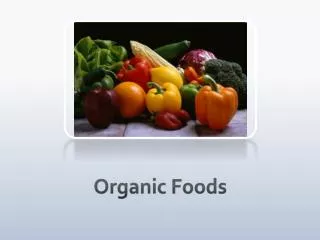
Organic Foods
Organic produce is cultivated without harmful chemical pesticides or fertilizers, ensuring that consumers avoid ingesting potentially dangerous residues. These crops are grown using sustainable farming practices that benefit both the environment and public health. Additionally, organic foods are never genetically modified, eliminating concerns about the long-term effects of GMOs. By choosing organic, families can enjoy fresher, healthier options that prioritize well-being and ecological responsibility. Make the switch to organic for a healthier lifestyle!


Organic Foods
E N D
Presentation Transcript
Organic produce is not sprayed with chemical pesticides and is not fertilized with chemical fertilizers. This is important because those chemicals are hard to wash off, and people will ingest some of them without knowing it when they eat the non-organic fruits and vegetables. Some of these chemicals are actually made difficult to wash off the plants on purpose by rain, which makes them difficult to wash off in your kitchen sink too! Yuck - who wants to eat stuff that was made to kill bugs? (For Healthy Kids, 2011) No Chemicals!!
Organic produce is mostly grown in farms using sustainable methods, which means that they are healthier for the crops and the environment! Farmers have strict rules about what types of natural fertilizers can be used so they don’t have to use chemicals. Good Farming (For Healthy Kids, 2011)
One big difference with organic foods is that they are never genetically modified. What's that? It's when scientists insert foreign DNA (often from an animal) into a plant's DNA in order to make it look the way they want. The long-term effects of human consumption of GMOs (genetically modified organisms) are not yet known, because they just haven't been around long enough yet. No gmos!!!!!! (For Healthy Kids, 2011)