Understanding Glaucoma: Causes, Symptoms, and Treatments
Glaucoma is a serious eye condition characterized by increased pressure inside the eye due to fluid buildup, affecting 2-3 million Americans and leading to blindness if untreated. It initially impacts peripheral vision and can progress to central vision loss. Symptoms include blurred vision, light sensitivity, halos around lights, and visual field loss. There are several types, including open-angle and narrow-angle glaucoma, each requiring different treatments, such as medications, laser surgery, or filtering surgery. Early detection and timely treatment are crucial.

Understanding Glaucoma: Causes, Symptoms, and Treatments
E N D
Presentation Transcript
Glaucoma So what is it? By Brian Yearwood, Jane Herndon, Jerri-Lynn Throgmorton, Kelsey McPherson
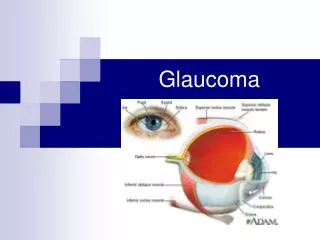
What is It…. • Glaucoma is a condition which occurs due to pressure build up inside the eye due to lack of drainage of fluid. It is one of the most common eye conditions in America affecting between 2-3 million people, and is a major cause of blindness.
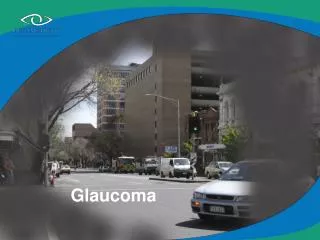
How it Affects Vision • Glaucoma is a progressive condition which starts at the peripheral vision and slowly works its way to the central vision. If untreated it will eventually overtake the entire vision (blindness).
Symptoms • It is not a noticeable condition until there is evident vision loss, hence the name, “Sneak Thief of Sight.” • Damage to the optic nerve is gradual and painless to the patient. • Symptoms of the patient can include • Blurred Vision • Sensitivity to light • Nausia
Symptoms Continued • Halos around lights • Bulging eyes • Cloudy corneas • Excessive tearing • Complaint of visual field loss in the side
Types of Glaucoma • Open Angle – Most common Symptom free at first Affects 1% of all Americans 50 years and older Leading cause of blindness among African Americans • Narrow Angle – Where drainage occurs is narrow
Types of Glaucoma Cont. • Other Types Might Include • Congenital – Occurs at birth • Low tension – Low Blood pressure • Traumatic – Blunt force trauma • Pigmentary Dispersion - Genetic • Neovascular – Secondary Glaucoma (Diabeties) Blocks the drain trabecular mesh work
Treatments Medication-eye drops, beta blockers, carbonic anhydrase inhibitors, alpha-2 agonists Surgery-Laser trabebuloplasty (increase fluid drainage), Laser iridotomy (hole in iris allows fluid to drain and relive pressure), Filtering surgery (cut hole in wall of eye to allow fluid to drain), Shunt procedure (tubes placed in eye to allow fluid to drain), Cyclodestructive procedures (destroy certain areas of ciliary body, produces fluid)
Tests to determine • Topography-laser that scans optic nerve • HfA Humphrey-shows blind spots and vision loss • Tonopen-touches cornea to messure pressure • Goldmann Visual Field • Tonometer-eye pressure, puff of air
Functional Implications • Have difficulties seeing black boards and overheads • Distance materials • Peripheral vision • Difficulty reading • Issues with contrast and lighting • Mobility
Educational Accomadations • Braille note • CCTV • Victor Reader Classic • Seating that accomadates visual fields • Laptop • Large print • Not high in contrast
Cont. Accomadations • O & M training • Appropriate objects for lighting • Other Literacy Media (if needed)