Chapter 1: Human Factors of Interactive Software
190 likes | 349 Vues
This chapter explores the critical human factors that influence the design of interactive software. It outlines the goals of system engineering and user-interface engineering, emphasizing the need to accommodate human diversity in physical, cognitive, and cultural aspects. Key design considerations include reliability, security, and user satisfaction. The content covers methodologies for task analysis and alternative comparisons, stressing the importance of standardization and consistency. By considering diverse user needs, particularly for the elderly and those with disabilities, we can create effective and inclusive user interfaces.


Chapter 1: Human Factors of Interactive Software
E N D
Presentation Transcript
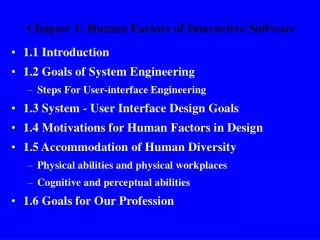
Chapter 1: Human Factors of Interactive Software • 1.1 Introduction • 1.2 Goals of System Engineering • Steps For User-interface Engineering • 1.3 System - User Interface Design Goals • 1.4 Motivations for Human Factors in Design • 1.5 Accommodation of Human Diversity • Physical abilities and physical workplaces • Cognitive and perceptual abilities • 1.6 Goals for Our Profession
Introduction • User Interfaces Are Products of Interdisciplinary Work • What are the Business Ramifications?
… Introduction • Individual User Level • International Influences
User Interface Engineering • Success requires commitment from designers and managers • Task analysis to ensure proper functionality • Generally alternatives must be compared • Reliability, Availability, Security, and Data Integrity
… User Interface Engineering • Standardization, Integration, Consistency, and Portability • Schedules and Budgets
System - User Interface Design Goals • Define the target user community associated with the interface • Communities evolve and change
…System - User Interface Design Goals • 5 human factors central to community evaluation: • Time to learn • Speed of performance • Rate of errors by users • Retention over time • Subjective satisfaction • Trade-offs sometimes necessary • Test all design alternatives using mock-ups
Motivations for Human Factors in Design • Life-critical systems • Industrial and commercial uses
… Motivations for Human Factors in Design 3. Office, home, and entertainment applications 4. Exploratory, creative, and cooperative systems
Accommodation of Human Diversity • Physical abilities and physical workplaces • Cognitive and perceptual abilities • Personality differences • Cultural and international diversity • Users with disabilities • Elderly Users
Physical Abilities and Physical Workplaces • There is no average user • Take into account dynamic measures such as reach, strength or speed • Account for variances in sense perception • Vision • Touch • Hearing • Workplace design can both help and hinder work performance
Cognitive and Perceptual Abilities • Cognitive processes • factors affecting perceptual and motor performance
Personality Differences • Different theories • Myers-Briggs • Gender differences??
Cultural and International Diversity • special characters • Left-to-right versus right-to-left • Date and time formats • Numeric and currency formats • Weights and measures • Telephone numbers and addresses • Names and titles (Mr., Ms., Mme.) • ID numbers • Capitalization and punctuation • Sorting sequences • Icons, buttons, colors • Pluralization, grammar, spelling • Etiquette, policies, tone, formality, metaphors
Users With Disabilities • Sight, hearing, mobility • Plan early to accommodate • Americans With Disabilities Act
Elderly Users • Forgotten by largely young technologists • Fast growing segment in US • Provide variability
1.6 Goals for Our Profession • Influencing academic and industrial researchers • Potential research topics • Providing tools, techniques, and knowledge for system implementers • Raising the computer consciousness of the general public