Meteors And Meteorites
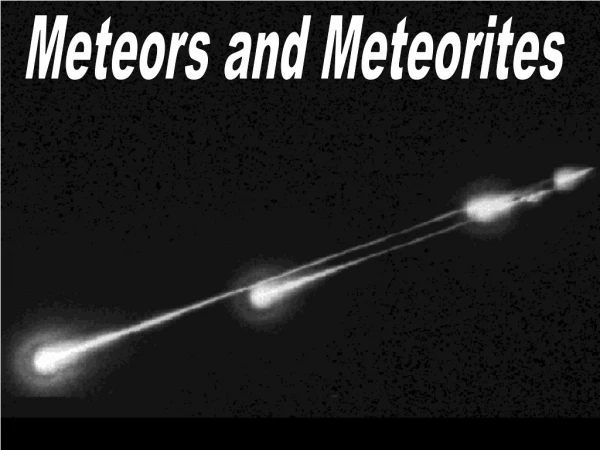
Meteors And Meteorites. Target 7. Explain the difference between a meteor and meteorite. What is a Meteor?. A Meteor is a Comet or Asteroid that completely burns up when it enters the Earths atmosphere.

Meteors And Meteorites
E N D
Presentation Transcript
Target 7 Explain the difference between a meteor and meteorite.
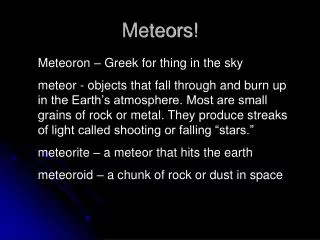
What is a Meteor? A Meteor is a Comet or Asteroid that completely burns up when it enters the Earths atmosphere As the Comet or Asteroid burns up, a streak is left behind. This sometimes known as a “shooting star”
What is a Meteorite? A Meteorite is a Comet or Asteroid that does not completely burn up when it enters the Earths atmosphere. As a result the comet or asteroid lands on the Earth’s surface. This is known as a “meteorite”
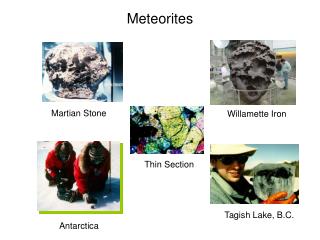
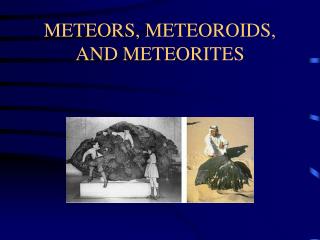
Willamette Meteorite The largest Meteorite found in the USA. Discovered in 1902
What is more likely going to be a meteor or a meteorite? Due to their composition, comet is more likely to burn up in the atmosphere while an asteroid is more likely to make it to the Earth’s surface
Target 8 Analyze the impact that meteorites of varying size (meteoroid and asteroid) have on the Earth.
Meteoroid • A meteoroid is a chunk of rock, metal, or dustin space.
Meteorite Meteoroids that survive as they pass through the atmosphere and hit Earth’s surface are called meteorites.
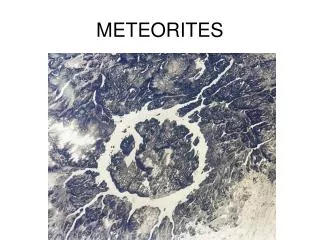
Barringer Meteor Crater, Arizona A meteorite can make a hole, or crater, in the ground when it hits it. The larger the meteorite, the bigger the hole.
Barringer Meteor Crater - Scientists think that the crater was formed sometime between 25,000 and 50,000 years ago by an iron meteorite, somewhere between 30 and 100m in diameter, weighing roughly 60,000 tons. - The energy released by the impact was roughly equivalent to 3.5 million tons of TNT.
Impacts and Affects of Meteorites Most Meteorites are small, however there are scars of larger scale meteorites still visible today.
Impacts • Large Impact Craters • Dust Clouds • Sunlight Blocked (food chain crumbles) • Wild Fires • Earthquakes • Tsunamis • Flooding
The Moon lacks a thick atmosphere so most comets and asteroids hit the Moon’s surface. This is why the Moon has so many craters (no plate tectonic movement means the impacts last forever)!