Download
1 / 4
40 likes | 170 Vues
In exploring the question of whether killing another human being can ever be justified, we delve into complex moral instances such as self-defense, war, or capital punishment. This piece also highlights the role of imagery in literature, illustrating how vivid descriptions can evoke sensory experiences and emotions. Through Emily Brontë's evocative language, we examine how different weather conditions shape the mood of a narrative. Furthermore, as part of a Personal Dictionary project, we encourage the selection of new words that enhance our writing.

E N D
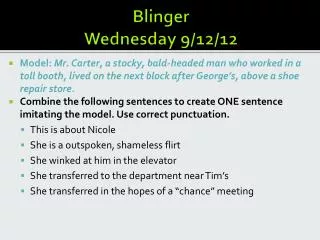
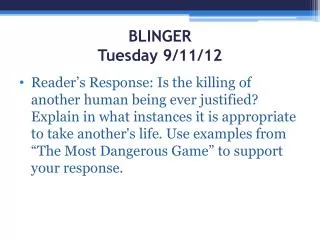
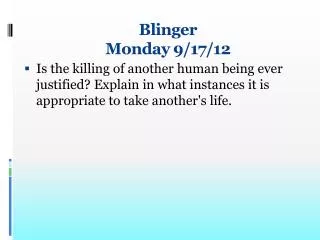
BlingerMonday 9/17/12 • Is the killing of another human being ever justified? Explain in what instances it is appropriate to take another's life.
Imagery • Imagery is the use of language that appeals to the senses. • It not only creates a sensory experience for the reader, but it often creates an emotional response that contributes to the mood or atmosphere of the piece. • “The rainy night had ushered in a misty morning—half frost, half drizzle—and temporary brooks crossed our path, gurgling from the uplands.” – Emily Bronte • Which words create visual images? Which create auditory images? • What feelings are associated with rain, mist, and frost? How would the mood of this passage be different if it read “…rainy night had ushered in a brilliant, sunny morning”?
Personal Dictionary • Each week, you will select a minimum of 3 previously unknown words from the texts that we read. • Complete an entry in your Personal Dictionary for each word. • Each week, 2 people will share their words and definitions with the class in the form of a PowerPoint (guidelines forthcoming). • You will be required to use words from your Personal Dictionary in your writing assignments.