Understanding Self-Regulation: Empowering Students for Success
Self-regulation is crucial for students to effectively respond to their environment, fostering independence and adaptability. This instructional strategy benefits a diverse population, including English Language Learners, students with learning disabilities, and those with emotional or behavioral disorders. By teaching self-regulation, educators help students decode their experiences, meet social expectations, and integrate emotional and cognitive development, creating a conducive learning environment. This intentional process enhances students' ability to self-monitor and achieve optimal conditions for task completion.

Understanding Self-Regulation: Empowering Students for Success
E N D
Presentation Transcript
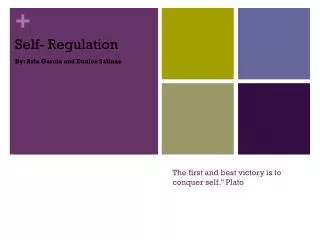
Self- Regulation The first and best victory is to conquer self.” Plato By: Arla Garcia and Eunice Salinas
What is Self Regulation? • Several processes that allow students to appropriately respond to their environment.
Population that benefits from strategy are students with: • English Language Learners • Learning Disabilities • Emotional & Behavioral Disorders • Visual impairments • Hearing impairments • Orthopedically impairments • Autism • Other health impairment • Mild intellectual disabilities • Attention Deficit Hyperactivity Disorder.
Instructional strategy description: • Process allows students to respond appropriately to their environment. • Helps students decode their experiences to understand their environment. • Allows students to meet social expectations. • Emotions and cognitive developments are interrelated. • Active and intentional processes. • Monitors conditions to obtain finest stimulation for given tasks.