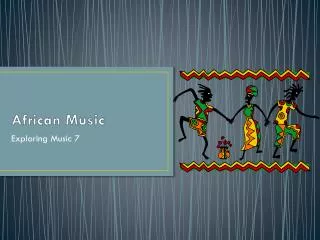
Mande: Dancing and Drumming
Delve into the rich history of the Mande people from the 13th century Mali Empire to contemporary music stars like Oumou Sangare. Discover the significance of dancing and drumming in Mali, where rhythms and movements embody respect and unity. Join Michelle Coulibaly on her journey from ballet to African dance and experience the powerful connection between performers, drummers, and the community.

Mande: Dancing and Drumming
E N D
Presentation Transcript
Mande: Dancing and Drumming T The West African Experience
What is Mande? • “Mande” is a heading of one of the major branches of the large Niger-Congo language groupings that covers most of West Africa (Charry 2000:15) - Liberia - Ghana - Sierra Leone - Senegal - Mali
History of Mande • In the 13th century, the West African Mande (or Mali) empire was established by the legendary warrior and hero Sunjata and his allies • The Mande homeland is situated along the Upper Niger River roughly between Bamako in southwestern Mali and Kouroussa in northeastern Guinea
Mali • Music is very important - Back in the time of the Mali Empire, griots performed songs for kings and nobles. - Mali has produced many stars of African music, including a number of female singers of Mande music - OumouSangare
Interview • Michelle Coulibaly -began as a ballet dancer but then later got introduced to African dancing by a lady from Sierra Leone - wanted to have a deeper understanding of how African dance worked -went to Senegal to study dance however, in Mali is where the dancing really affected her
Drumming • In Mali, as well as in the Mande class the djembe is played. -meaning of the drum translates into “everyone gather together in peace” - lead djembe player controls the ensemble and engages in two fundamental kinds of playing -singing or group dancing - solo dancing
Dancing • In Mali, performers sing to the drummers before dancing to symbolize respect • In public events, a circle is formed with the drummers at the head - dancers emerge singly or in twos and threes approaching the drummers, engaging with them for short periods of time and then falling back into the circle - those in the circle support the dancers by clapping and cheering