Download
1 / 7
70 likes | 200 Vues
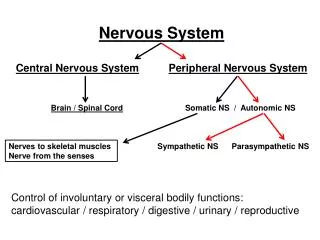
The nervous system is a complex network of nerves and cells that conveys messages between the brain, spinal cord, and body parts. It consists of the central nervous system (brain and spinal cord), peripheral nervous system (limbs), cranial system (brain, eyes, mouth, ears), and autonomic system (organs like lungs and heart). It collaborates with the circulatory and excretory systems to manage bodily functions and maintain homeostasis. Essential for communication within the body, the nervous system plays a critical role in coordinating responses and regulating functions.

E N D
Nervous System By: Gracie Morehead and Nathan Blumberg
Function of Nervous System • Complex network of nerves and cells that carry messages to and from the brain and spinal cords to various parts of the body.
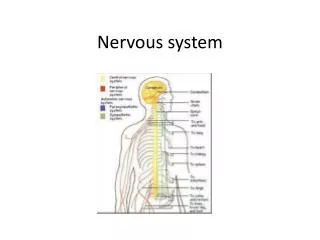
Organs of the Nervous System • Central: Brain and spinal cord • Peripheral: Arms, legs, hands, and feet • Cranial: Brain, eyes, mouth, and ears • Autonomic: Lungs, heart, stomach, intestines, spinal cord, and bladder
Body Systems that work with Nervous System. • The Nervous System works with the Circulatory System and the Excretory System. • Circulatory System helps your tissues and organs need direction from your Nervous System. • Excretory System helps your Nervous System helps your digestion in your Excretory System.
How the Nervous System works • Most complex system in the human body sends messages to the other parts of the body. • The Nervous System is called the communication system of the body.
Sources www.medical-referance.net/.../how-does-nervous-system-work.htm www.biology4kids.com/files/systems_nervous.html