Amphibians
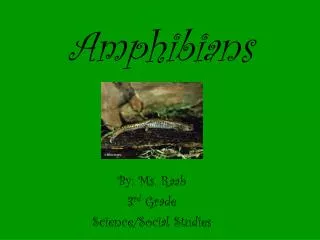
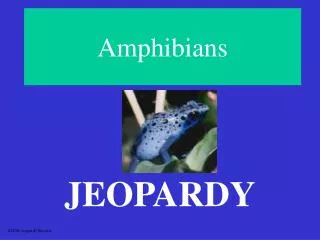
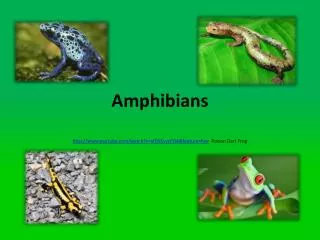
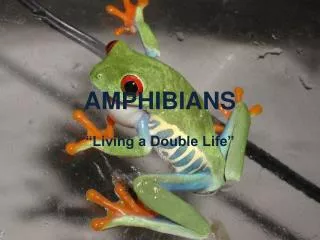
Amphibians, meaning "double life," spend part of their lives in water. They have smooth skin that must remain moist for respiration. Their eggs lack shells, requiring them to be laid in water and undergo external fertilization. Common examples include frogs, toads, salamanders, and newts. In contrast, reptiles possess dry, scaly skin that allows them to thrive entirely on land. They shed their skin to grow and lay amniotic eggs with leathery shells that prevent drying, enabling them to reproduce on land. Examples include snakes, lizards, and crocodiles.

Amphibians
E N D
Presentation Transcript
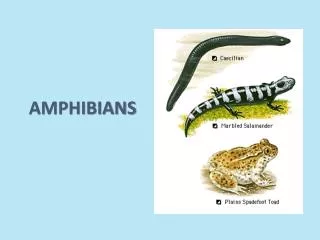
Amphibians • - Means ”double life”, spends part or all of its life in water • - skin is smooth and must remain damp for them to breathe through skin • - eggs do not have shells, so they must be laid in water • - external fertilization • - caecilians, frogs, toads, salamanders and newts
Reptiles • dry, scaly skin that does not dry out, so can live completely on land, but must shed skin to grow • - amniotic eggs have leathery shells so they won't dry out, they can lay eggs on land • - internal fertilization • ex.snakes, lizards, tortoises, turtles, crocodiles and alligators