Understanding Anorexia Nervosa: A Comprehensive Guide for High School Students
200 likes | 331 Vues
Anorexia Nervosa is a serious eating disorder characterized by self-starvation and an intense fear of gaining weight. It often stems from low self-esteem, perfectionist pressures, and poor body image, affecting both males and females, although 10-15% of patients are men. The disorder manifests through restrictive eating, purging behaviors, and compulsive exercise, leading to severe health issues like muscle loss and heart complications. Recognizing the signs and seeking help is crucial for recovery. This guide provides insights into recognizing anorexia, its symptoms, and practical steps for support.


Understanding Anorexia Nervosa: A Comprehensive Guide for High School Students
E N D
Presentation Transcript
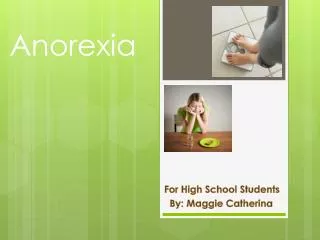
Anorexia For High School Students By: Maggie Catherina
Anorexia Nervosa is… • An eating disorder where one continually starves themselves.
Also… • Disorder that focuses on food but attempts to deal with perfection.
Causes Anorexia Nervosa Patients tend to have: Low self-esteem Perfectionist standards from peers, families, and oneself
More causes… Poor body image Idealized thinness Dissatisfied with their own body
Male can also be anorexic • 10-15% of patients are males • Less likely to seek treatment because “women’s disease” • Gay males: 15% bulimic & 20% anorexic
Types of Anorexia Restricted amount of food entered into the body. Dieting, fasting, and exercising. • Induced vomiting after eating. • Leads to serious digestive system health risks.
Anorexia Physical Signs and Symptoms Slow heart rate Brittle bones Muscle loss
More Signs and Symptoms • Dehydration • Fainting • Decreased fertility
Dramatic weight loss Denial of being too thin Fixation on body image Critical of appearance Anorexia Behavioral Signs and Symptoms
More Anorexia Behavioral Signs and Symptoms Preoccupation with food Secret food rituals
Signs and Symptoms of Purging Using laxatives or diet pills Throwing up immediately after eating Compulsive exercise
THE DIFFERENCE BETWEEN DIETING AND ANOREXIA HEALTHY DIETING ANOREXIA • Self-esteem based on more than body image. • Self-esteem based on body image • Weight loss is a way to be happy • Weight loss to be healthy • Becoming thin is all that matters; health is not a concern. • Goal is to lose weight in a healthy way.
STATISTICS 1 in every 200 American women suffer 3rd most common chronic illness among young adults.
STATISTICS Most common age is between 12 and 25 Only 1 in 10 people receive treatment
SOCIOCULTURAL FACTORS Certain cultures influence diseases like anorexiaWestern society mostly
Admitting you have a problem • Talk to someone • Stay away from people and places that may cause a relapse • Seek professional help Steps to Recovery
HOW TO HELP • Confront the patient • Talk to an adult or professional • Call the National Eating Disorders Association • 1-847-931-2237 OR research for tips on: • National Eating Disorders Association Eating Disorders Kill!