
Understanding the Hepatitis Epidemic: Importance of Treating Chronic Hepatitis C
The hepatitis epidemic remains a significant health concern, with chronic hepatitis C virus (HCV) affecting approximately 5 million individuals in the U.S. and chronic hepatitis B virus (HBV) possibly impacting 2 million more. Most HCV patients are asymptomatic until serious liver damage occurs, making early diagnosis crucial. Effective treatment can lead to a sustained virologic response (SVR), decreasing the risk of liver failure and hepatocellular carcinoma (HCC). SVR not only improves liver health but also enhances overall survival rates.

Understanding the Hepatitis Epidemic: Importance of Treating Chronic Hepatitis C
E N D
Presentation Transcript
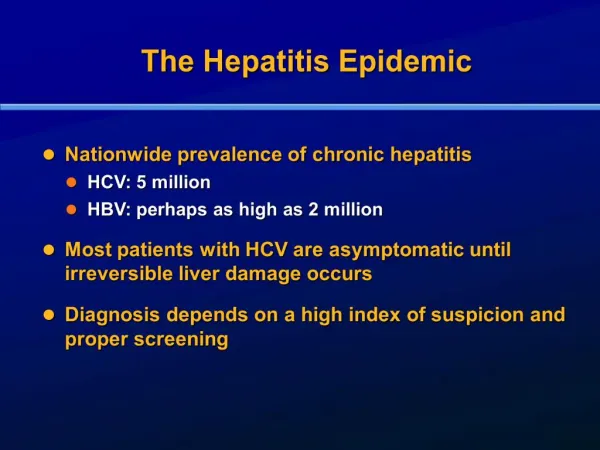
1. The Hepatitis Epidemic Nationwide prevalence of chronic hepatitis
HCV: 5 million
HBV: perhaps as high as 2 million
Most patients with HCV are asymptomatic until irreversible liver damage occurs
Diagnosis depends on a high index of suspicion and proper screening
2. Why Treat Chronic Hepatitis C? The disease HCV is common, chronic, and potentially progressive Complications are becoming more common Liver failure Hepatocellular carcinoma (HCC) The treatment Viral cure, or sustained virologic response (SVR), is achievable SVR is associated with histologic improvement and gradual regression of fibrosis1 SVR leads to lower risk for liver failure and HCC, as well as improved survival2,3