Overview of Social Theory, Stress, and Mental Health in Relation to Society
130 likes | 238 Vues
This review covers key concepts in social theory as they relate to mental health, stress processes, and the impact of social factors such as gender and ethnicity. It examines influential theories from prominent sociologists including Durkheim and Turner, as well as essential studies on income, mental illness, and the role of marriage. Emphasis is placed on the treatment of mental health conditions, disparities among different social classes, and the significance of informal social support. The content is structured to aid understanding for assessments, with a focus on non-cumulative readings.


Overview of Social Theory, Stress, and Mental Health in Relation to Society
E N D
Presentation Transcript
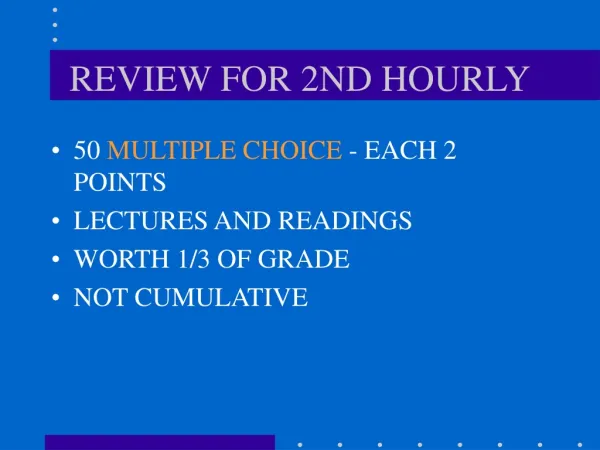
REVIEW FOR 2ND HOURLY • 50 MULTIPLE CHOICE - EACH 2 POINTS • LECTURES AND READINGS • WORTH 1/3 OF GRADE • NOT CUMULATIVE
READINGS • BOOK CHAPTERS • GENERAL ASPECTS NOT SPECIFIC DETAILS
SOCIAL THEORY • HISTORY • DURKHEIM • WWII – MILITARY PSYCHIATRY • STRESS - SELYE • *HOLMES AND RAHE (SRRS) - ASPECTS AND CRITICISMS
SOCIAL THEORY • THOITS - SRRS AND THEORIES • *PEARLIN • GENERAL STRUCTURAL PROCESSES • DIFFERENT ELEMENTS OF STRESS PROCESS
SOCIAL THEORY • TURNER - INFORMAL SOCIAL SUPPORT AND COPING • WHEATON - TYPES OF STRESSORS • TREATMENT, STRENGTHS AND WEAKNESSES
SOCIAL CLASS • EATON CHAPTER AND LECTURE • SOCIAL CAUSATION AND SELECTION • *FARIS AND DUNHAM STUDIES • STUDIES OF INCOME AND MENTAL ILLNESS • LENNON CHAPTER – HOW JOBS RELATED TO MENTAL HEALTH
ETHNICITY • RATES IN DIFFERENT ETHNIC GROUPS (WILLIAMS CHAPTER) • EFFECT ON SHAPING SYMPTOMS – WESTERN AND NON-WESTERN
ETHNICITY • EFFECT ON SOCIAL SUPPORT – LA STUDY • EFFECT ON TREATMENT - ENTERING, STAYING • TAKEUCHI CHAPTER – IMPACT OF ETHNICITY ON MENTAL HEALTH SERVICES
GENDER • *GENDER AS SOCIAL ROLE AND ROLE EXPECTATIONS • TYPES OF ROLES RELATED TO DISTRESS – WORK, MARITAL • GENDER AND TYPES OF MENTAL ILLNESSES
MARRIAGE • REASONS WHY MARRIAGE IS GOOD (TRADITIONAL) • REASONS WHY BENEFITS MIGHT BE DATED OR GENDER-BIASED
RUTGERS HHDP STUDIES • FINDINGS ON MARRIAGE AND MENTAL HEALTH • WHAT THEORY SUPPORTED • MEN AND WOMEN • SEPARATION AND DIVORCE – HOW HARMFUL? SEX SPECIFIC? • IMPACT OF PARENTAL DIVORCE
SOCIAL RESPONSE • RELATIONSHIP OF M.I. AND TREATMENT • LINK AND PHELAN; PESCOSOLIDO AND BOYER • STAGES OF RECOGNITION • *SOCIAL CLASS AND INCIDENCE AND PREVALENCE OF TREATED PSYCHOSES AND NEUROSES
SOCIAL RESPONSE • RELATIONSHIP OF GENDER TO OUTPATIENT AND INPATIENT TREATMENT • SOCIAL PREDICTORS OF WHO ENTERS TREATMENT