Download
1 / 7
70 likes | 188 Vues
This overview examines various public transit options such as buses, light rail transit (LRT), heavy rail/subway, and commuter rail. Buses are cost-effective, offering flexible routes and services for neighborhoods and tourists. Rapid transit systems, powered by light rail and heavy rail, boast higher capacity and faster travel times, primarily operating on dedicated tracks. Each mode of transit has unique characteristics regarding capital costs, operational flexibility, and maintenance needs, essential for providing a quality and safe transit service.

E N D
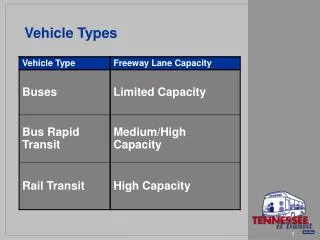
Buses • Lower capital costs • Flexible routes • Variety of services –commuter, neighborhood, small area shuttles, tourist trolleys • Service easy to start and change
Bus Rapid Transit • Vehicles operate in both shared or exclusive roadway • More flexible routing • Urban and urban-suburban • Faster travel times
Rapid Transit • Light rail transit (LRT) • Medium/high capacity • Shared or separate roadway • Heavy rail/Subway • Urban and urban-suburban • Exclusive tracks, grade-separated • No at-grade crossings or mixed traffic • Monorail • Elevated tracks and station platforms,on columns • Limited application in dense urban areas
Rapid Transit(continued) • Commuter rail • Operates on existing tracks • Self-propelled electric or diesel • Serves inter-urban commuters • Characteristics of rapid transit • Higher capital costs • Much higher speedand capacity • Unknown contingency costs – construction, right of way, project mitigation, grade separation, etc.
Vehicle Maintenance • Maintenance important for quality and safe transit service • Maintenance facilities and equipment required for all bus fleets