Download
1 / 8
90 likes | 292 Vues
Crafting compelling headlines is essential for capturing attention. Follow the split rules, ensuring modifiers align with their subjects. Avoid splitting verbs and prepositions from their objects, and refrain from ending with prepositions. To maintain clarity, don’t repeat words within the same page headlines and use appropriate attribution strategically. Always use present or future tense to convey urgency. Capitalization should adhere to downstyle, with figures instead of words for numbers. Understand punctuation nuances—dashes, colons, and commas can enhance clarity and emphasis.

E N D
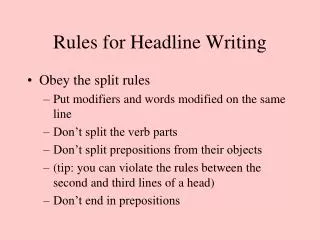
Rules for Headline Writing • Obey the split rules • Put modifiers and words modified on the same line • Don’t split the verb parts • Don’t split prepositions from their objects • (tip: you can violate the rules between the second and third lines of a head) • Don’t end in prepositions
Don’t repeat words • Even in deck • Related rule is don’t repeat words, especially colorful verbs, on same page headlines • Headline shouldn’t repeat lead sentences verbatim or even echo its wording
Use attribution and qualification appropriately • Attribution can be implied: “President called liar” • In a tight headline, “may” comes in handy • Can use colon to subsitute for said, etc. “President: We won’t give up! • Quotation marks not implied attribution
Verb tense – most headlines written in present tense, lends air of urgency. Also future tense, infinitive form.
Capitalization: • Downstyle is most common, only first word is up • Modified Upstyle: Main words capitalized, still popular at some papers • Upstyle: All words up • Watch abbreviations, no periods in acronyms • Use AP style for state abbreviations, • Use figures in headlines sted of words
Punctuation problems: • No periods at end • Comma can be used to replace the word “and” • Semicolons rather than commas separate clauses • Single quotes replace double, take up less space • Dashes and colons can replace said: Dash at end, colon at start • Dashes also can be used for emphasis • Colons can sometimes replace verbs “Nascar racing: most dangerous sport”
Remember the x factor (not the same at Simon Cowell’s TV show)