holi festival
50 likes | 73 Vues
The Colors and Significance of Holi A Festival of Unity and Love<br>


holi festival
E N D
Presentation Transcript
ARTICLE The Colors and Significance of Holi A Festival of Unity and Love BY MOHIT-KUMAR-SHARMA MAR 06, 2023 12:48
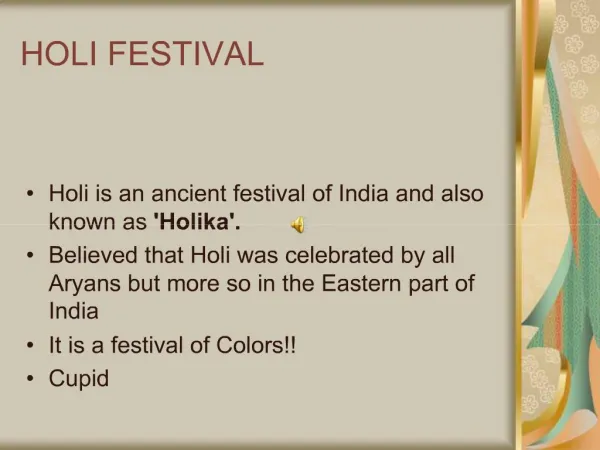
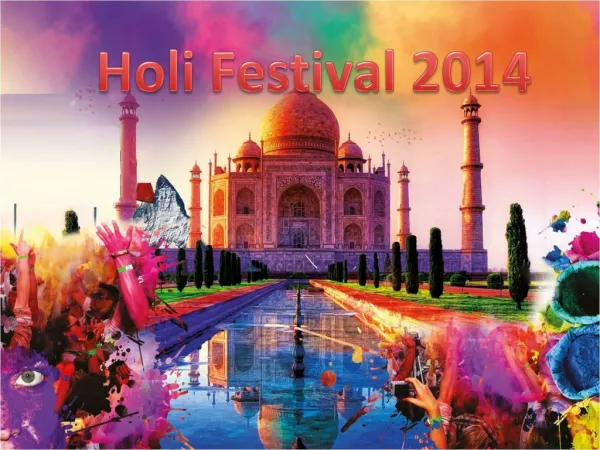
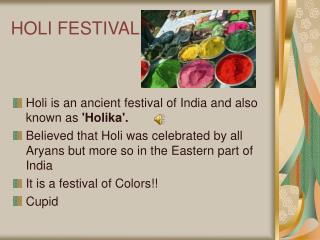
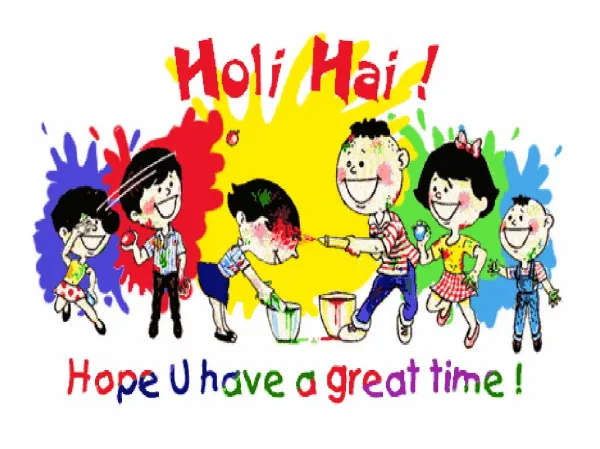
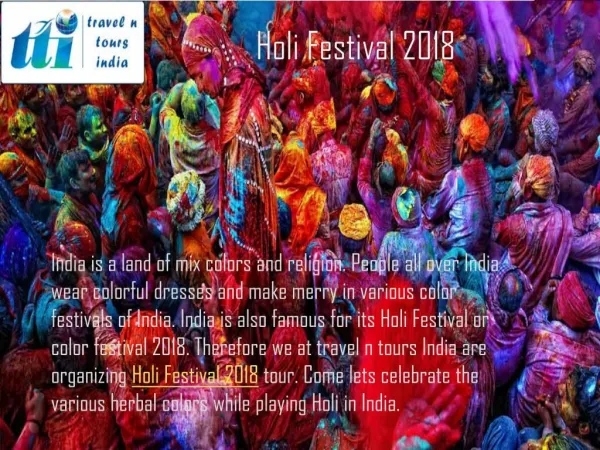
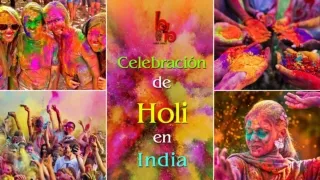
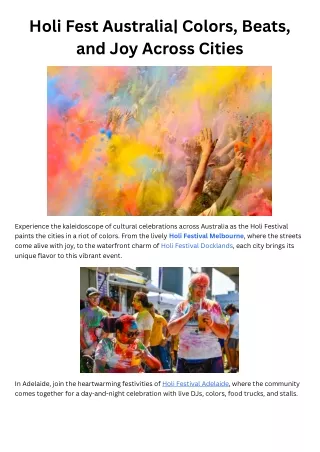
Holi is a joyous and colorful festival celebrated by millions of people all over the world, especially in India and Nepal. It is also known as the "Festival of Colors" or the "Festival of Love" and marks the victory of good over evil. The festival usually takes place in late February or early March, according to the Hindu calendar. The festival has a deep-rooted cultural and religious significance. It is believed to have originated as a celebration of the arrival of spring, which symbolizes renewal, growth, and prosperity. According to Hindu mythology, the festival commemorates the victory of the virtuous Prahlada over the demon king Hiranyakashipu, who had attempted to kill his own son for defying his authority and worshiping Lord Vishnu instead. The festival is celebrated over two days. On the first day, known as Holika Dahan, people light bonfires and burn effigies of the demoness Holika, who, according to legend, was killed by Lord Vishnu to save Prahlada. The burning of the effigies symbolizes the destruction of evil and the triumph of good. The second day is the main day of the festival, known as Rangwali Holi or Dhulandi. This is when people play with colors and water, sing, dance, and enjoy traditional delicacies. People smear each other with colored powders, throw water balloons, and spray water guns to create a riot of colors. The colors are made from natural sources such as flowers, herbs, and spices and are believed to have medicinal properties. Holi is a time for unity, forgiveness, and the strengthening of social bonds. It is a festival that transcends barriers of caste, creed, and gender and brings people from all walks of life together. It is also a time to forget grudges, bury the hatchet, and mend broken relationships. The festival is celebrated with great enthusiasm not just in India and Nepal but also in many other countries, including the United States, the United Kingdom, and Canada, among others. In recent times, there have been concerns about the use of synthetic colors, which can cause skin allergies and other health problems. In response to this, many people have switched to using natural colors or even avoided the use of colors altogether, preferring instead to celebrate the festival with music, dance, and food
In conclusion, Holi is a vibrant and colorful festival that celebrates the victory of good over evil and the arrival of spring. It is a time to come together, forgive, forget, and spread love and joy. The festival is an integral part of the rich cultural heritage of India and is a must-see for anyone visiting the country during this time of the year. ALSO READ Online Courses with Certificate - Authorised certificate recognized everywhere TAGS:HOLI FESTIVALINDIANEPALHINDU MYTHOLOGYHOLIKA DAHANRANGWALI HOLICOLORSNATURAL COLORSSYNTHETIC COLORSUNITYFORGIVENESSCULTURAL HERITAGE.