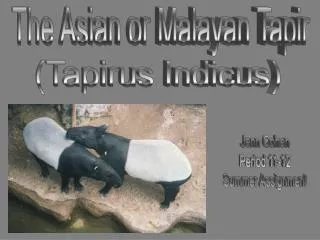
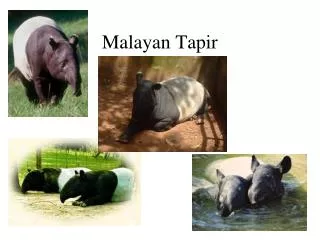
world tapir day
World Tapir Day is celebrated annually on April 27th to raise awareness about tapirs and their conservation status. Tapirs are a group of large, herbivorous mammals that are found in Central and South America, as well as in Southeast Asia. There are four species of tapirs: the Baird's tapir, the Brazilian tapir, the Malayan tapir, and the mountain tapir. Unfortunately, all four species of tapirs are currently listed as either endangered or vulnerable by the International Union for Conservation of Nature (IUCN), making World Tapir Day an important occasion to spread awareness about their plight


world tapir day
E N D
Presentation Transcript
ARTICLE The Importance of World Tapir Day Understanding the Threats to Tapirs and the Efforts to Protect Them BY MOHIT-KUMAR-SHARMA APR 27, 2023 14:24
World Tapir Day is celebrated annually on April 27th to raise awareness about tapirs and their conservation status. Tapirs are a group of large, herbivorous mammals that are found in Central and South America, as well as in Southeast Asia. There are four species of tapirs: the Baird's tapir, the Brazilian tapir, the Malayan tapir, and the mountain tapir. Unfortunately, all four species of tapirs are currently listed as either endangered or vulnerable by the International Union for Conservation of Nature (IUCN), making World Tapir Day an important occasion to spread awareness about their plight. Tapirs play an important role in their ecosystems. They are seed dispersers, helping to maintain the balance of forests by spreading seeds from the fruits they eat throughout their habitats. They also serve as prey for predators such as jaguars, pumas, and crocodiles. However, human activities such as deforestation, hunting, and habitat destruction have led to a decline in tapir populations, putting their role in these ecosystems at risk. To help protect tapirs and their habitats, conservation efforts are underway around the world. These efforts include habitat restoration, captive breeding programs, and community education initiatives. In this article, we will explore the importance of tapirs, the threats they face, and the conservation efforts aimed at protecting them. The Importance of Tapirs Tapirs are important members of their ecosystems for several reasons. Firstly, as herbivores, they play a crucial role in maintaining the balance of forest ecosystems. Tapirs consume large amounts of fruits, leaves, and stems, and in doing so, they disperse seeds throughout their habitats. This process helps to ensure that the forests continue to grow and thrive, providing habitat for a wide range of species. In addition to their role as seed dispersers, tapirs also serve as prey for a variety of predators. Predators such as jaguars, pumas, and crocodiles rely on tapirs as a source of food, and their presence in the ecosystem helps to maintain a healthy balance between predator and prey populations.
Threats to Tapirs Despite the important role that tapirs play in their ecosystems, their populations are in decline due to a variety of human activities. One of the biggest threats to tapirs is habitat loss and fragmentation. As forests are cleared for agriculture, logging, and other human activities, tapirs are left with smaller and more fragmented habitats. This makes it more difficult for them to find food and mates, and puts them at greater risk of predation and other threats. Another major threat to tapirs is hunting. Tapirs are hunted for their meat, which is considered a delicacy in some cultures. Additionally, their hides and other body parts are sometimes used in traditional medicine. Hunting pressure can quickly deplete tapir populations, especially in areas where hunting regulations are not enforced. Conservation Efforts To help protect tapirs and their habitats, a variety of conservation efforts are underway around the world. One of the most important of these efforts is habitat restoration. By restoring degraded or fragmented habitats, conservationists can provide tapirs with the resources they need to survive and thrive. Habitat restoration can also benefit other species that share the same habitat as tapirs, helping to maintain a healthy balance in the ecosystem. Captive breeding programs are another important tool for tapir conservation. These programs involve breeding tapirs in captivity and then releasing them into the wild. Captive breeding can help to increase the overall population of tapirs, and can also help to establish new populations in areas where tapirs have been extirpated. Community education is also an important part of tapir conservation efforts. By educating local communities about the importance of tapirs and the threats they face Conclusion World Tapir Day is an important event that raises awareness about tapirs and their conservation. Tapirs are important members of their ecosystems, and their conservation is critical for maintaining the health and diversity of these habitats. Through education
and conservation efforts, we can work to protect tapirs and their habitats for future generations. ALSO READ The Purple Cap Winners of IPL A Look at the Best Bowlers from 2008-2023 - This Year Educate Yourself and Develop Your Skill with EasyShiksha Online Courses with Certificate - Authorised certificate recognized everywhere TAGS:WORLD TAPIR DAYTAPIR CONSERVATIONHABITAT RESTORATIONCAPTIVE BREEDINGCOMMUNITY EDUCATIONENDANGERED SPECIESHERBIVORESSEED DISPERSALPREDATOR- PREY DYNAMICSHUNTINGHABITAT LOSSECOSYSTEM BALANCE.