Download

1 / 18
0 likes | 1 Vues
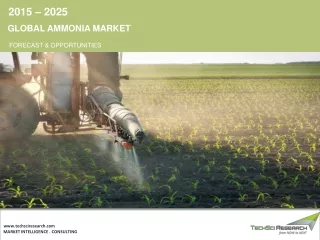
The Philippines ammonia market size reached USD 1,733.75 Million in 2025. The market is projected to reach USD 2,476.56 Million by 2034, growing at a CAGR of 4.04% during 2026-2034.

E N D
Philippines Ammonia Market: Size, Share & Growth The Philippines ammonia market represents a compelling growth opportunity within Southeast Asia's expanding industrial and agricultural landscape. Valued at USD 1,733.75 million in 2025, the market is projected to reach USD 2,476.56 million by 2034, reflecting a robust compound annual growth rate of 4.04% during the forecast period of 202632034. This comprehensive analysis examines the key drivers, emerging trends, competitive dynamics, and strategic opportunities shaping the Philippines ammonia sector4 providing institutional investors and corporate strategists with data-driven insights for informed decision-making in this high-potential market.
MARKET OVERVIEW Philippines Ammonia Market: Current Landscape & Growth Trajectory Market Fundamentals The Philippines ammonia market stands at a critical inflection point, driven by expanding agricultural demand, industrial diversification, and infrastructure modernization. The market's 4.04% CAGR significantly outpaces regional GDP growth, signaling strong structural demand fundamentals. Ammonia serves as a cornerstone chemical intermediate across multiple value chains— from nitrogen-based fertilizers supporting the country's rice and corn production to industrial applications in refrigeration, pharmaceuticals, and chemical manufacturing. The sector benefits from government initiatives promoting food security and agricultural productivity enhancement.
Market Key Growth Drivers Agricultural Intensification Industrial Expansion Infrastructure Development Import Dependency & Local Production Growth in downstream chemical manufacturing, pharmaceuticals, and industrial refrigeration applications. The Philippines' expanding manufacturing base creates sustained demand for ammonia as a key intermediate chemical and refrigerant. Rising fertilizer consumption driven by government programs targeting food security and self-sufficiency in rice and corn production. The Department of Agriculture's initiatives to increase crop yields directly translate to higher ammonia-based fertilizer demand. Government infrastructure programs under the "Build, Build, Build" initiative drive construction-related ammonia applications. Cold chain logistics expansion for food preservation also increases industrial ammonia requirements. Strategic initiatives to reduce import reliance through local production capacity development. Investment in domestic ammonia production facilities strengthens supply chain resilience and reduces foreign exchange exposure. Population & Economic Growth The Philippines' demographic dividend and rising per capita income drive increased food demand, necessitating higher agricultural productivity and, consequently, greater fertilizer consumption supporting ammonia market expansion.
Market Trends: Shaping the Future Sustainability & Technology Integration The Philippines ammonia market is witnessing significant transformation driven by sustainability imperatives and technological advancement. Green ammonia production using renewable energy sources represents an emerging trend, aligning with global decarbonization objectives and the Philippines' renewable energy targets. Digital supply chain optimization and precision agriculture technologies are enhancing ammonia distribution efficiency and application effectiveness. Smart farming techniques enable targeted fertilizer application, improving crop yields while minimizing environmental impact. The shift toward more efficient ammonia synthesis processes, improved storage and handling infrastructure, and enhanced safety protocols reflects industry maturation. These trends position the market for long-term sustainable growth while addressing environmental and operational challenges.
End Use Industry Analysis Fertilizer Production Dominates Agricultural fertilizers constitute the largest ammonia consumption segment, accounting for the majority of market demand. Urea, ammonium nitrate, and other nitrogen-based fertilizers essential for rice, corn, and high- value crop production drive this segment. The Philippines' agricultural sector's modernization and yield improvement initiatives ensure sustained fertilizer demand growth, making this the most stable and predictable end-use category for ammonia consumption. Industrial Applications Specialty Chemicals Emerging Applications Refrigeration systems, chemical synthesis, and pharmaceutical manufacturing represent growing industrial demand segments with higher margin potential. Expanding use in specialty chemical production, including cleaning agents, explosives for mining, and water treatment applications diversifies demand sources. Potential future applications in hydrogen carrier systems and energy storage solutions position ammonia at the forefront of clean energy transition strategies. Request a Sample Report with the Latest 2026 Edition: https://www.imarcgroup.com/philippines-ammonia-market/requestsample
Market Dynamics: Forces at Play Balancing Growth & Constraints The Philippines ammonia market operates within a complex ecosystem of accelerating drivers and moderating constraints. Strong agricultural and industrial demand fundamentals provide robust growth momentum, while import dependency and global price volatility introduce risk factors. Regulatory frameworks governing chemical handling, environmental standards, and import regulations shape operational parameters. Infrastructure limitations in storage, transportation, and distribution networks present both challenges and investment opportunities. The interplay between government policy support, private sector investment, and international supply chain dynamics creates a market environment requiring sophisticated strategic positioning for optimal returns.
Strategic Market Entry Approaches 1 2 3 Import & Distribution Local Production Investment Downstream Integration Establishing distribution partnerships with international ammonia producers to serve domestic demand through reliable supply chains. Developing domestic ammonia production capacity through greenfield projects or joint ventures to capture higher value chain margins. Vertical integration into fertilizer manufacturing or industrial applications to secure demand and enhance profitability. Each approach offers distinct risk-return profiles. Import-based strategies provide faster market entry with lower capital requirements but expose operators to foreign exchange and supply chain risks. Local production demands significant capital investment but offers superior margins, supply security, and strategic positioning for long-term market leadership.
Key Investment Opportunities Capturing Value Across the Chain The Philippines ammonia market offers multiple entry points for strategic investment, each with distinct value propositions and risk profiles. Production Capacity Development Green Ammonia Projects Infrastructure development represents immediate opportunity given current capacity constraints. Green ammonia positions investors at the intersection of chemical markets and clean energy transition, offering premium positioning for ESG-focused capital. Establishing domestic ammonia synthesis facilities to reduce import dependency and capture upstream value. Investing in renewable energy-powered ammonia production aligned with sustainability trends and carbon reduction goals. The combination of strong demand fundamentals, policy support, and infrastructure gaps creates a favorable environment for well- structured investments with appropriate risk mitigation strategies. Distribution Infrastructure Downstream Applications Developing storage terminals, transportation networks, and handling facilities to enhance supply chain efficiency. Expanding into value-added products including specialty fertilizers, industrial chemicals, and pharmaceutical intermediates.
Recent Industry News & Developments 2025 UPDATES 1 March 2025: Government Agricultural Support Package The Philippine Department of Agriculture announced enhanced subsidy programs for fertilizer procurement, directly benefiting ammonia-based fertilizer demand. The initiative targets 500,000 hectares of rice cultivation with 2 February 2025: Infrastructure Investment Announcements Major chemical logistics companies announced plans to expand cold chain and chemical storage infrastructure in key agricultural regions, improving ammonia distribution capabilities and reducing logistics costs. improved input access. 3 January 2025: Green Chemistry Initiative Launch The Philippine government launched its Green Chemistry Roadmap, including provisions for incentivizing sustainable ammonia production technologies. This policy framework supports investment in renewable energy-integrated ammonia synthesis facilities.
Regulatory Environment & Policy Support Favorable Policy Framework The Philippines maintains a supportive regulatory environment for ammonia production and distribution, with government policies actively promoting agricultural productivity and industrial development. The Department of Agriculture's fertilizer subsidy programs and the Department of Energy's renewable energy initiatives create demand- side and supply-side support mechanisms. Environmental regulations governing chemical handling and emissions are progressively strengthening, aligning with international standards while providing clear compliance pathways. Investment incentives through the Board of Investments offer tax holidays and duty exemptions for priority chemical manufacturing projects.
Why Smart Investors Are Looking to Invest in Philippines Ammonia Market 1 Predictable Growth Fundamentals The 4.04% CAGR through 2034 provides visibility into sustained market expansion driven by structural demand factors rather than cyclical volatility. Agricultural and industrial consumption patterns demonstrate stability and predictability essential for long-term capital deployment. 2 Strategic Geographic Positioning The Philippines' location within ASEAN's high-growth corridor, combined with improving trade infrastructure and regional economic integration, positions the market as a potential export hub serving broader Southeast Asian demand. 3 Policy Tailwinds & Government Support Consistent government commitment to agricultural modernization, food security, and industrial development creates a favorable policy environment. Investment incentives and infrastructure spending further enhance the investment case. 4 Infrastructure Development Opportunity Current capacity constraints and infrastructure gaps represent high-return investment opportunities for first-movers establishing production facilities, storage networks, and distribution capabilities ahead of demand acceleration. 5 Sustainability-Driven Value Creation The transition toward green ammonia production aligns with global ESG investment mandates while positioning early adopters for premium market positioning and regulatory advantages in an increasingly carbon-conscious marketplace.
Risk Factors & Mitigation Strategies Navigating Market Challenges Import dependency exposes operators to foreign exchange fluctuations and international supply chain disruptions. Mitigation strategies include currency hedging, developing local production capacity, and maintaining diversified supplier relationships. Assess Impact Evaluate supply chain and margin exposure. Develop Strategies Local production and hedging approaches. Commodity price volatility affects both input costs and end-product pricing. Long-term supply agreements, vertical integration, and sophisticated inventory management practices help stabilize margins and ensure competitive positioning. Identify Risks Import dependency and price volatility. Monitor & Adjust Use market intelligence and agile ops. Regulatory changes and environmental compliance requirements necessitate continuous monitoring and adaptive operational strategies. Proactive engagement with policymakers and investment in best- practice compliance systems minimize regulatory risk exposure. Successful market participation requires comprehensive risk assessment and proactive mitigation strategies addressing both market-specific and systemic risk factors.
Price Dynamics and Market Economics Understanding Cost Structures Ammonia pricing in the Philippines reflects a complex interplay of international benchmark prices, natural gas costs (the primary feedstock), freight rates, foreign exchange movements, and domestic supply-demand dynamics. Import parity pricing typically establishes the domestic price ceiling, with local production economics determining the floor. Natural gas availability and pricing represent the most significant cost driver for domestic production, accounting for 60-80% of production costs in conventional ammonia synthesis. Energy costs, including electricity for compression and cooling systems, constitute additional substantial expense categories. Transportation and logistics costs add 10-15% to the delivered price, with storage, handling, and distribution expenses further impacting end-user pricing. The development of local production capacity could significantly alter price dynamics by reducing import dependency and logistics costs, potentially improving margins across the value chain.
Supply Chain Architecture 01 02 Production/Import Port Reception & Storage Ammonia originates from domestic production facilities (limited current capacity) or international imports from major producing regions including the Middle East, Southeast Asia, and Northeast Asia. Material arrives at major Philippine ports with specialized chemical handling facilities. Storage terminals maintain inventory for distribution to downstream users and regional markets. 03 04 Distribution Network End Use Application Specialized chemical logistics providers transport ammonia via tanker trucks, railcars, or pipeline systems to fertilizer plants, industrial users, and regional distribution centers. Final consumption occurs across agricultural (fertilizer production/application), industrial (refrigeration, chemical synthesis), and specialty application segments. Supply chain efficiency improvements through infrastructure investment and digital optimization represent significant value creation opportunities, potentially reducing total delivered costs by 8-12% while improving supply reliability.
Investment Return Potential 4.04% $2,476.56 Million Market CAGR Market Expansion Value Consistent annual growth rate through 2034 providing stable expansion trajectory Absolute market size increase from 2025 to 2034 representing addressable opportunity Attractive Risk-Adjusted Returns The Philippines ammonia market offers compelling return potential across multiple investment strategies. Production facilities, while capital- intensive, deliver superior margins and strategic positioning. Distribution infrastructure investments provide moderate returns with lower capital requirements and faster deployment timelines. The combination of market growth, policy support, and current infrastructure constraints creates asymmetric return opportunities for well- structured investments with appropriate risk management frameworks.
Strategic Recommendations for Investors Conduct Comprehensive Due Diligence Prioritize Infrastructure Assets Embrace Sustainability Positioning Build Strategic Partnerships Focus initial investments on storage, distribution, and handling infrastructure where capacity constraints create immediate value creation opportunities. Infrastructure assets provide stable cash flows while positioning for future production investments. Incorporate green ammonia technologies and renewable energy integration into investment strategies. Sustainability differentiation provides competitive advantages, regulatory benefits, and premium pricing opportunities in evolving markets. Develop relationships with government agencies, agricultural cooperatives, industrial users, and international producers. Strategic partnerships reduce market entry barriers, accelerate growth, and mitigate operational risks. Perform detailed market analysis, competitive assessment, and regulatory evaluation. Engage local partners with deep market knowledge and established relationships. Validate demand projections through customer engagement and supply chain mapping. Implement Phased Investment Approach Structure investments in stages, beginning with market presence establishment through distribution, followed by infrastructure development, and ultimately production capacity as market knowledge and relationships deepen.
Conclusion: A Compelling Investment Opportunity Market Fundamentals The Path Forward The Philippines ammonia market combines stable growth, structural demand drivers, policy support, and attractive return potential into a compelling investment proposition for institutional capital. With USD 743 million in projected market expansion through 2034, driven by agricultural modernization and industrial development, the market offers multiple strategic entry points across the value chain. Infrastructure constraints present near-term opportunities, while green ammonia transition positions forward-thinking investors at the intersection of chemical markets and clean energy evolution. For investors seeking exposure to Southeast Asia's growth trajectory with manageable risk profiles and clear value creation pathways, the Philippines ammonia market merits serious strategic consideration and detailed evaluation. Ask an analyst for your customized sample: https://www.imarcgroup.com/request?type=report&id=44451&flag=C
Contact Us IMARC Group is a leading market research company providing management strategy and market research worldwide. Partner with us to access comprehensive market intelligence and strategic insights. United States Office United Kingdom Office India Office 134 N 4th St, Brooklyn, NY 11249 C-130, Sector 2, Noida, UP 201301 30 Churchill Place, London E14 5EU Phone: +1-201-971-6302 Phone: +91-120-433-0800 Phone: +44-753-714-6104 Visit our website: www.imarcgroup.com For inquiries regarding the Philippines Ammonia Market report, please contact our sales team to discuss how our research can support your investment and strategic planning objectives.