
Efficient Data Transmission: Lempel-Ziv Compression Example Explained
E N D
Presentation Transcript
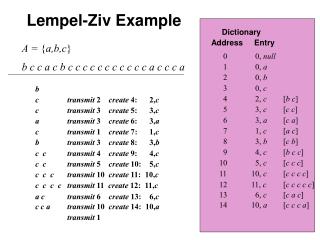
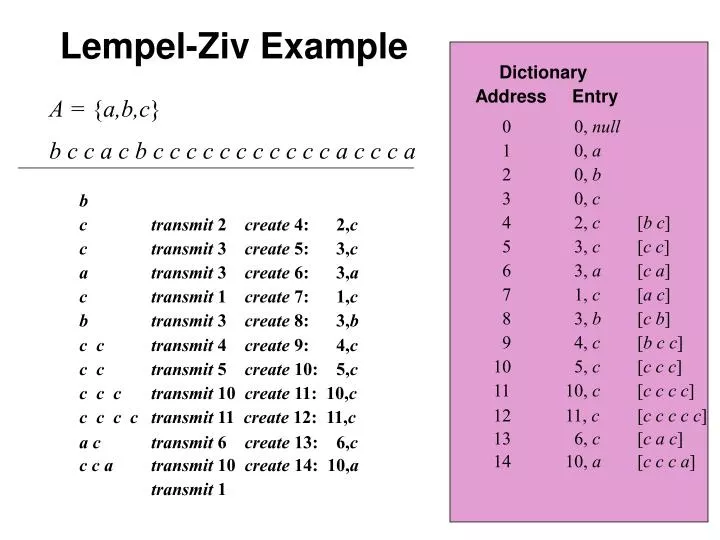
0 0, null 1 0, a 2 0, b 3 0, c 4 2, c [b c] c transmit 2 create 4: 2,c 5 3, c [c c] c transmit 3 create 5: 3,c 6 3, a [c a] a transmit 3 create 6: 3,a 7 1, c [a c] c transmit 1 create 7: 1,c 8 3, b [c b] b transmit 3 create 8: 3,b 9 4, c [b c c] c c transmit 4 create 9: 4,c 10 5, c [c c c] c c transmit 5 create 10: 5,c 11 10, c [c c c c] c c c transmit 10 create 11: 10,c 12 11, c [c c c c c] c c c c transmit 11 create 12: 11,c 13 6, c [c a c] a c transmit 6 create 13: 6,c 14 10, a [c c c a] c c a transmit 10 create 14: 10,a Lempel-Ziv Example Dictionary Address Entry A = {a,b,c} b c c a c b c c c c c c c c c c c a c c c a b transmit 1