
SlideServe
Menu
Préférences
© SlideServe · v2026

Pollution

thora avatar
10 diapositives · 338 Views · Sep 30, 2014

Pollution. Work made by: Raquel Costa 11.ºC, n.º16. Pollution

Pollution - slide 1
01 / 10Pollution
1 / 17

Télécharger la présentation

Pollution
Une image / un lien ci-dessous est fourni (tel quel) pour télécharger la présentation

Politique de téléchargement : le contenu du site vous est fourni TEL QUEL pour votre information et votre usage personnel ; il ne peut être vendu, concédé sous licence ni partagé sur d’autres sites sans l’accord de son auteur.Le contenu vous est fourni TEL QUEL, pour votre information et votre usage personnel uniquement. Téléchargez la présentation en cliquant sur ce lien. Lors du téléchargement, si vous ne parvenez pas à télécharger une présentation, l’éditeur a peut-être supprimé le fichier de son serveur.Pendant le téléchargement, si vous ne parvenez pas à obtenir une présentation, le fichier a peut-être été supprimé par l’éditeur.

F I N

Plus de contenu associé

Transcription de la présentation
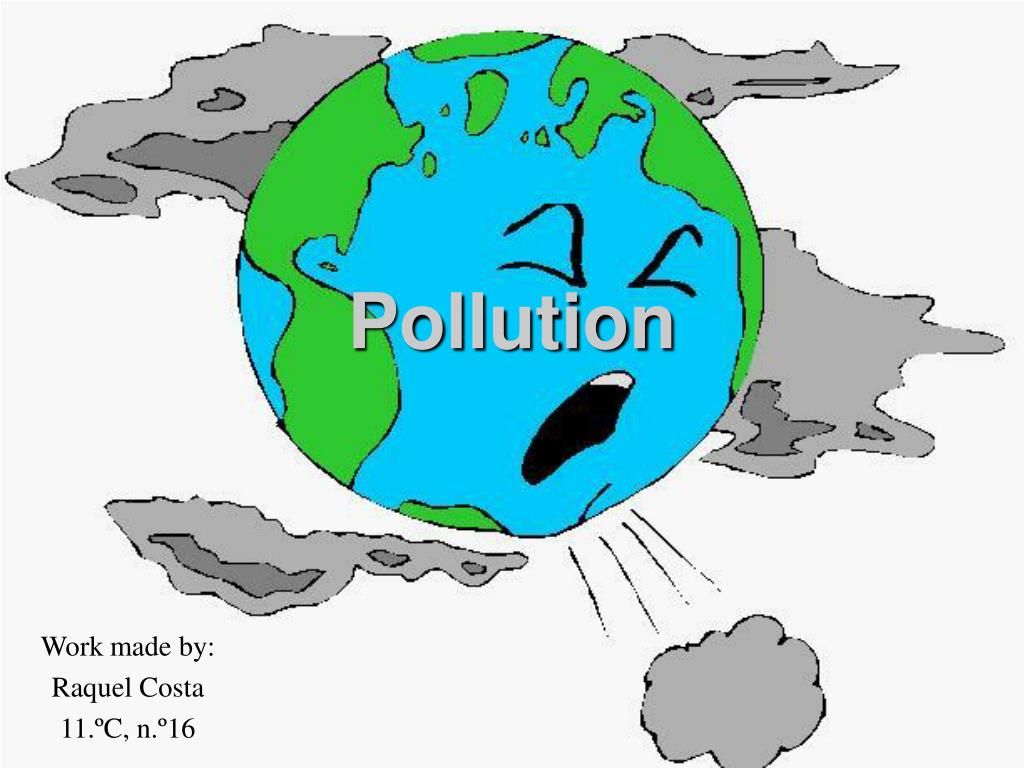
  1. Pollution Work made by: Raquel Costa 11.ºC, n.º16

  2. Pollution • Pollution is the introduction of pollutants (whether chemical substances, or energy such as noise, heat, or light) into the environment to such a point that its effects become harmful to human health, other living organisms, or the environment (http://en.wikipedia.org/wiki/Pollution, 19/10/07 ).

  3. We can identify several types of pollution: • Water pollution; • Air pollution; • Sound pollution; • Soil or ground pollution; • Light pollution.

  4. The levels of pollution are growing because: • Population is increasing; • Forests are disappearing; • There are more big cities with less “green spaces”; • Non rational use of resources. We are ruining our planet by taking actions without looking to its consequences.

  5. Some consequences of pollution are global threats: • Greenhouse effect ; • Global warming; • Climate changes; • Depletion of the ozone layer; • Lack of drinking water; • Glaciers melt (raise of sea levels); • Destruction of ecosystems. These changes put in danger living organisms as well as human health.

  6. We must decrease our wastes, emission of dangerous gases and save water to preserve our future. It is up to us! • Use energy-saving long life light bulbs; • Don’t use non biodegradable plastic bags; • Use public transports instead of personal cars; • Use rechargeable batteries;

  7. It is up to us! • Stop waterfrom running when brushing your teeth; • Put a water bottle inside your flusher; • Control taps and use dirty water for plants; • Don’t leave TV, video or other appliances on “stand by”; • Separate your wastes in order to be recycled.

  8. These are simple things that anyone can do, but we all know that there are many people that don’t follow them because is not easy to change our habits and people refer to have less work than help the planet . In fact some people do even worse: we can easily find rubbish in the streets, bottles in the rivers...

  9. A brighter future? People’s way of thinking must change in order to provide next generations a better planet. Some examples of measures that are taking place: • Children are receiving information about what they can do to help the environment starting from nursery and primary schools. • Governments are investing more in facilities directed for collecting and treating residues. • There are television programs about environment conservation for adults and youngest.

  10. Sources: http://www.tendringdc.gov.uk/TendringDC/Environment/EIR.htm http://www.enchantedlearning.com/subjects/volcano/glossary/indexg.shtml http://en.wikipedia.org/wiki/Pollution BARROS, Virgínia; CORREIA, Paula; PINTO, Fernando; Screen 2, Porto Editora, 2007.