Understanding the Molecular Basis of Genotype-Phenotype Relationships in DNA Replication
90 likes | 250 Vues
This text explores the intricate relationship between genotype and phenotype through the processes of DNA replication and gene expression. It highlights key elements such as transcription, translation, and the role of enzymes like helicases, polymerases, and primases in DNA synthesis. The function of the replisome and accessory proteins during DNA replication is discussed, emphasizing how DNA supercoiling is managed by topoisomerases. Finally, it details how RNA primers are synthesized and filled in during lagging strand formation, shaping the complexities of genetic analysis in organisms.


Understanding the Molecular Basis of Genotype-Phenotype Relationships in DNA Replication
E N D
Presentation Transcript
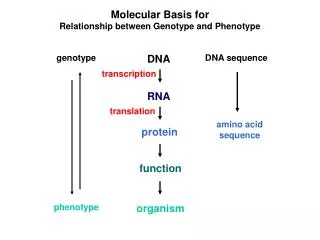
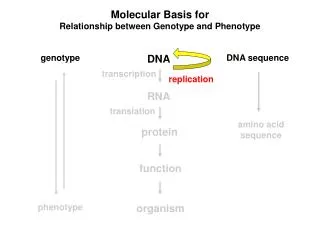
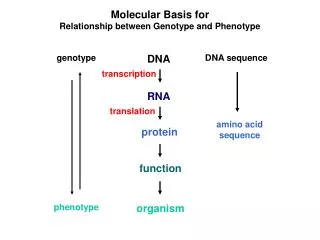
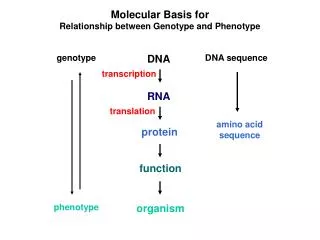
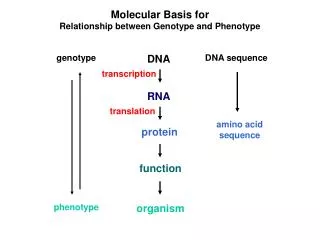
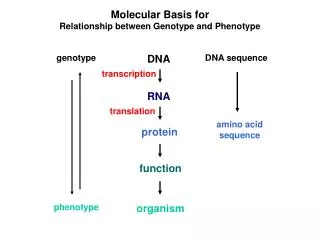
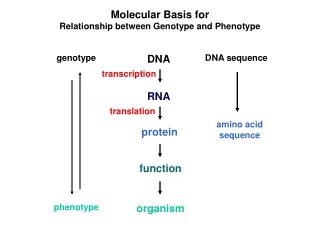
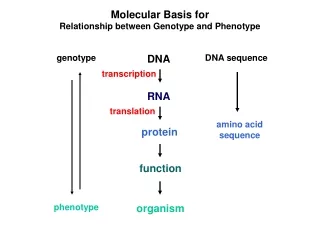
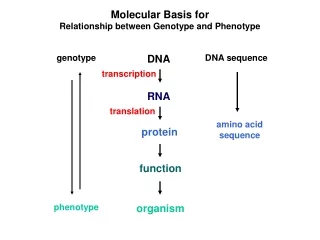
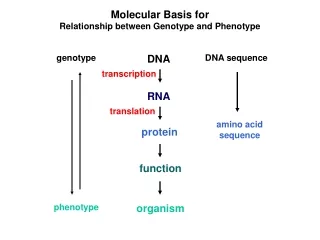
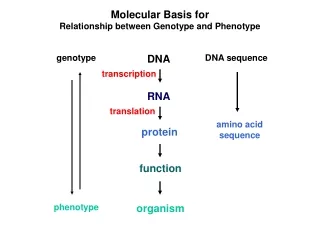
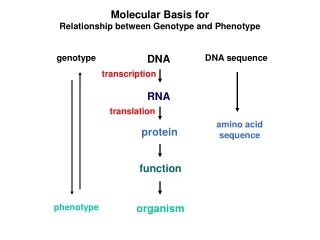
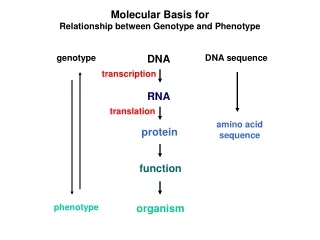
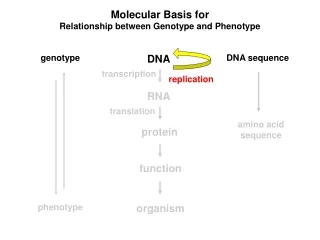
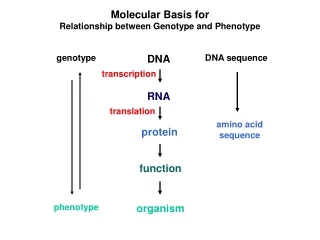
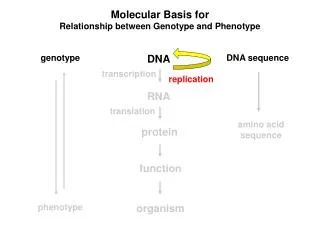
Molecular Basis for Relationship between Genotype and Phenotype genotype DNA DNA sequence transcription replication RNA translation amino acid sequence protein function phenotype organism
Replisome and Accessory Proteins Looping of template DNA for the lagging strand allows the two new strands to be synthesized by one dimer. pol III holoenzyme is a complex of many different proteins. Refer to Figure 7-20 from Introduction to Genetic Analysis, Griffiths etal., 2012.
Priming DNA Synthesis DNA polymerases can extend (but cannot start) a chain. Primase enzyme makes short RNA primer sequence complementary to template DNA. DNA polymerase extends RNA primer with DNA. Primosome is a set of proteins that are involved in the synthesis of RNA primers. Refer to Figure 7-20 from Introduction to Genetic Analysis, Griffiths etal., 2012.
Supercoiling results from separation of template strands during DNA replication.
Helicases and Topoisomerases Helicase enzymes disrupt hydrogen bonding between complementary bases. Single-stranded binding protein stabilizes unwound DNA. Unwound condition increases twisting and coiling, which can be relaxed by topoisomerases (such as DNA gyrase). Topoisomerases can either create or relax supercoiling. They can also induce or remove knots.
Chromatin assembly factor I (CAF-I) and histones are delivered to the replication fork. CAF-I and histones bind to proliferating cell nuclear antigen (PCNA), the eukaryotic version of clamp protein. Nucleosome assembly follows thereafter. Refer to Figure 7-23 from Introduction to Genetic Analysis, Griffiths etal., 2012.
Overview of DNA Synthesis DNA polymerases synthesize new strands in 5’ to 3’ direction. Primase makes RNA primer. Lagging strand DNA consists of Okazaki fragments. In E. coli, pol I fills in gaps in the lagging strand and removes RNA primer. Fragments are joined by DNA ligase.
Initiation at Origin of Replication Prokaryotes: Fixed origin DnaA proteins DnaB (helicase) Eukaryotes: Multiple origins ORC protein complex Cdc6 and Cdt1 MCM complex (helicase)