Understanding Common Causes of Vertigo: Vestibular Neuritis, Meniere’s Disease, and BPPV
This presentation differentiates between various causes of vertigo, highlighting key characteristics of vestibular neuritis, Meniere’s disease, and benign paroxysmal positional vertigo (BPPV). Vestibular neuritis features prolonged vertiginous attacks lasting hours to days, while Meniere’s disease is marked by longer episodes that couple with aural fullness and hearing changes. BPPV, the most common type, entails brief episodes triggered by specific head movements. A thorough understanding of these conditions aids in accurate diagnosis and effective management.

Understanding Common Causes of Vertigo: Vestibular Neuritis, Meniere’s Disease, and BPPV
E N D
Presentation Transcript
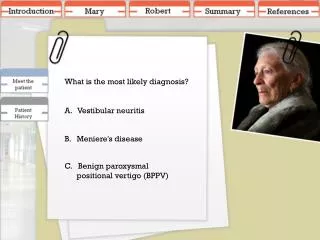
INCORRECT In vestibular neuritis, the vertiginous attack lasts hours to several days and is not clustered in spells as in this patient. Please try again.
INCORRECT In Meniere’s disease, the duration of the vertiginous attack is usually longer than 20 minutes and may last several hours. The vertigo attack is typically associated with unilateral aural fullness, tinnitus and hearing loss. Please try again.
Thispresentationissuggestiveofpositionalvertigo.Themostcommonetiologyofvertigoisbenignparoxysmalpositionalvertigo. This condition results in episodic vertigo that typically lasts seconds to minutes. Turning the head in a particular position usually triggers the spells. CORRECT NEXT
Physical Exam In other peripheral disorders, vertigo can be triggered by head movement. However, the trigger is not position-specific and the episodes tend to last much longer. CORRECT NEXT