Understanding the 2010 Mid-Term Elections: Candidates, Influence, and Outcomes
In this guide, we explore the candidates running for the House of Representatives in District 9 and District 5, highlighting their key beliefs. We delve into the dynamics of the 2010 Mid-Term Elections, examining how a President can influence these elections and vice versa. Additionally, we provide insights into the composition of the Senate and the House of Representatives, including the total number of seats, majority requirements, and toss-up races. Stay informed with interactive maps from the New York Times and Real Clear Politics for deeper analysis.

Understanding the 2010 Mid-Term Elections: Candidates, Influence, and Outcomes
E N D
Presentation Transcript
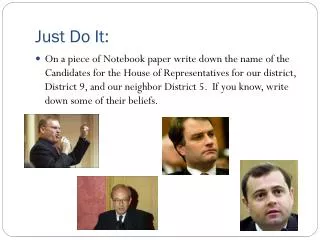
Just Do It: • On a piece of Notebook paper write down the name of the Candidates for the House of Representatives for our district, District 9, and our neighbor District 5. If you know, write down some of their beliefs.
Mid-Term Elections 2010 How does a President influence Mid-term elections? How do Mid-term elections influence the President?
The Senate • Total number of seats in the senate: • 100 • Total number of seats needed for a majority: • 100 / 2 = 50 + 1 = 51 • Total number of toss-ups: • 19
The Senate Democrats Republicans Total seats not up for election: 40 Total predicted wins (safe): 6 Total seats not up for election: 23 Total predicted wins (safe): 12
New York Times Interactive Senate Map • Real Clear Politics Interactive Senate Map
The House of Representatives • Total number of seats in the House: • 435 • Total number of seats needed for a majority: • 435 / 2 = 217.5 -> round up -> 218 • Total number of toss-ups: • 111
The House Democrats Republicans Total seats running unopposed: 10 Total predicted wins (safe): 140 Total seats running unopposed: 31 Total predicted wins (safe): 143
New York Times Interactive House Map • Real Clear Politics Interactive House Map