Download
1 / 12
120 likes | 229 Vues
The nervous system controls and regulates every action of the body through electrical signals that flow between the brain, spinal cord, and peripheral systems. It comprises two main parts: the Central Nervous System (CNS), which includes the brain and spinal cord, and the Peripheral Nervous System (PNS), which distributes information throughout the body. We explore voluntary and involuntary activities, how neurons transmit signals across synapses using neurotransmitters, and the effects of various substances on neurotransmitter levels. Understanding this intricate system is crucial for recognizing its influence on behavior and health.

E N D
What it does • Controls & regulates everything a body does • Electrical signals sent from brain to the rest of the body and vice versa
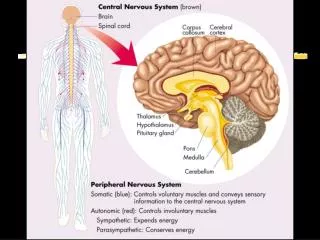
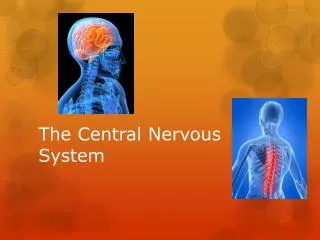
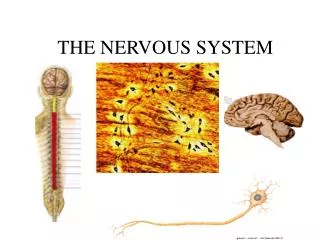
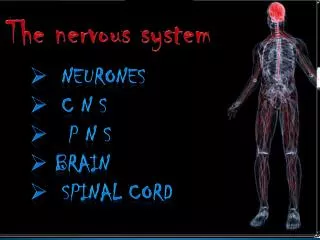
The Two Systems • Central Nervous System (CNS): the brain and the spinal cord • The highway of the body’s transmitted information • Spinal cord contained inside your vertebrae (for protection)
The Two Systems • Peripheral nervous system (PNS): carries information throughout the rest of the body • To and from organs (like skin), and tissues (like muscle)
Voluntary & Involuntary Activities • Somatic: part of peripheral nervous system that controls skeletal muscles, • Ex.: movement, like throwing a ball • Autonomic: part of peripheral nervous system that controls internal biological functions • Ex.: breathing, digestion, heart beat, etc. • Also controls the body’s response to emergencies
Neurons • Cells that make up the neural pathways of the nervous system. • They pass electrical signals from one to the next.
Neurons • Signals pass from the axon of one neuron to the dendrites of the next. • The space between two neurons is called the synapse
Synapse: Mind the Gap • Neurotransmitters: chemicals “messengers” sent across the synapse to pass the electrical impulse from one neuron to the next • Out-of-balance neurotransmitter levels often lead to prolonged emotional/psychological problems • Some neurotransmitters also function as hormones in the blood stream
Synapse: Mind the Gap • Endorphins: weakens feelings of pain, makes you feel good. • Dopamine: involved in reward-based learning. • Chemical dependency on drugs like cocaine is often because they help the body release dopamine. • Illegal drugs tend to hurt the body’s ability naturally release healthy levels of dopaminein the long run.
Unlocking your Neurotransmitters • Endorphins: extended exercise, spicy foods, feelings of love, sexual stimulation. • Dopamine: brain exercises, solving puzzles, Sudoku, • Serotonin (low levels impacts depression): eat a banana, carb-rich “comfort food” in moderation
Neurotransmitters • Some neurotransmitters also function as hormones in the blood stream
Nervous Endocrine • Messages sent quickly, through nerves • Effects dissipate quickly Messages are slower, sent via bloodstream Effects linger longer (leave you feeling amped up, in a funk, etc.)