Orthopedic Surgical Instruments
surgical instruments online offers a comprehensive array of precision tools for medical professionals. Specializing in orthopedic surgical instruments, they provide a one-stop destination for high-quality equipment tailored to orthopedic procedures. From delicate bone saws to sturdy retractors, their catalogue encompasses tools designed to meet the demands of orthopedic surgery.

Orthopedic Surgical Instruments
E N D
Presentation Transcript
A Beginner's Guide to Understanding Orthopedic Surgical Instruments This guide explores the intricate world of orthopedic surgical instruments, providing an overview of their functions and applications. It aims to demystify these specialized tools, helping you understand their importance in treating musculoskeletal conditions. In the ever-evolving field of surgery, the tools and instruments used are just as important as the skills of the surgeon. For those new to the medical profession or exploring surgical specialties, understanding the various types of surgical instruments can seem daunting. This guide aims to simplify the essentials of orthopedic surgical instruments, alongside comparisons to ENT (Ear, Nose, and Throat) surgery instruments and ophthalmic surgical instruments.
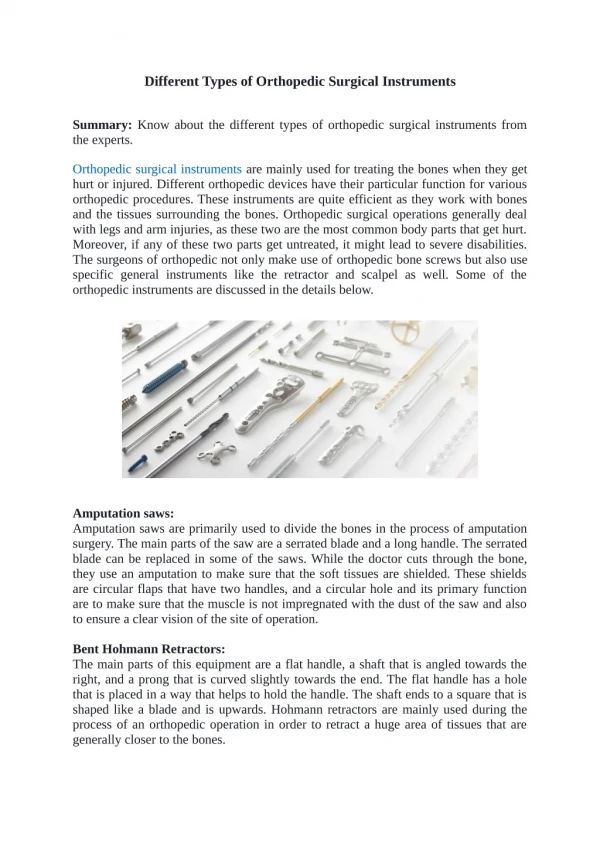
What Are Orthopedic Surgical What Are Orthopedic Surgical Instruments Instruments Orthopedic surgical instruments are specialized tools designed for orthopedic procedures, which focus on the diagnosis and treatment of musculoskeletal disorders. These instruments aid in various tasks, such as cutting, gripping, suturing, and drilling bones and soft tissues. They are essential for surgeries ranging from joint replacements to fracture repairs.
Scalpels, Scissors, and Clamps Scalpels Used for making precise incisions in tissue. Scissors Used for cutting tissue and suture materials. Clamps Used for holding tissue, controlling bleeding, and manipulating instruments.
Bone Saws and Rasps Bone Saws Rasps Osteotomes Used for cutting bone to correct deformities, remove bone, or prepare bone for implants. Used for smoothing and shaping bone surfaces. Used for chiseling and shaping bone.
Retractors and Elevators Retractors 1 Used to hold tissue and organs out of the way of the surgical field. Elevators 2 Used to lift and separate tissue from bone. Periosteal Elevators 3 Used to detach the periosteum, the membrane that covers bone.
Exploring Ophthalmic Surgical Instruments Exploring Ophthalmic Surgical Instruments Ophthalmic surgical instruments are specialized tools used in eye surgeries. Like ENT instruments, ophthalmic tools are designed for precision but are tailored for an even more delicate area. Common Ophthalmic Surgical Instruments Include: • Scissors: Designed for cutting tissue without damaging surrounding areas. • Forceps: Used for grasping delicate tissues of the eye. • Speculums: Instruments that hold the eyelids open during surgery. • Needle Holders: Designed for suturing delicate tissues in the eye. While orthopedic surgical instruments must handle more substantial forces and tougher materials, ophthalmic instruments focus on finesse and precision, often requiring microsurgery techniques.
Conclusion Conclusion Understanding the different types of surgical instruments is crucial for anyone entering the medical field, especially those interested in surgery. Ophthalmic surgical instruments are vital for treating musculoskeletal issues, while ENT and ophthalmic instruments cater to specialized needs in their respective fields. Regardless of the specialty, quality and technology play a pivotal role in ensuring successful surgical outcomes. For beginners, familiarizing oneself with these instruments and their uses is the first step in mastering surgical practices. The knowledge gained today can lead to improved patient care and outcomes in the future.