Prohibition
Prohibition in the United States was a national ban on the sale, manufacture, and transportation of alcohol from 1920 to 1933. Initiated by the 18th Amendment and enforced by the Volstead Act, it emerged from the efforts of the American Temperance Society and women's movements, viewed as a means to improve society. However, it led to unintended consequences like bootlegging, organized crime, and a general disregard for the law. The 21st Amendment ultimately repealed Prohibition. Explore its causes, effects, and whether it could succeed today.

Prohibition
E N D
Presentation Transcript
Prohibition 1920-1933
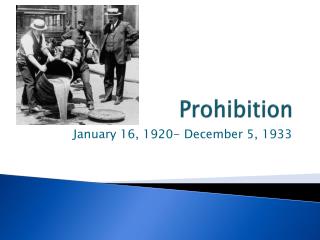
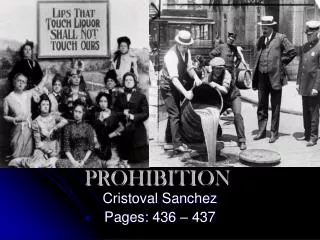
What was Prohibition? • The national ban of sale, manufacture, and transportation of alcohol in the U.S. from 1920-1933.
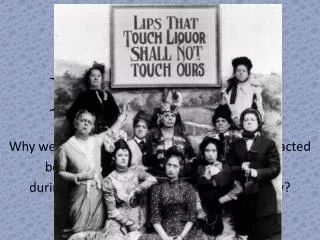
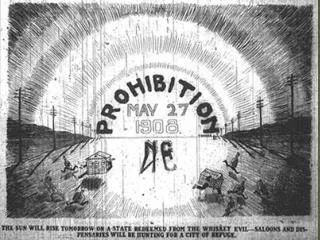
How did it start? • American Temperance Society and Women’s Temperance Movement. • Seen as a progressive issue. “To improve society” • Several protestant denominations (esp. methodists) spoke out against alcohol. • Kansas was first state to adopt prohibition. It’s successes helped spur prohibition at a national level.
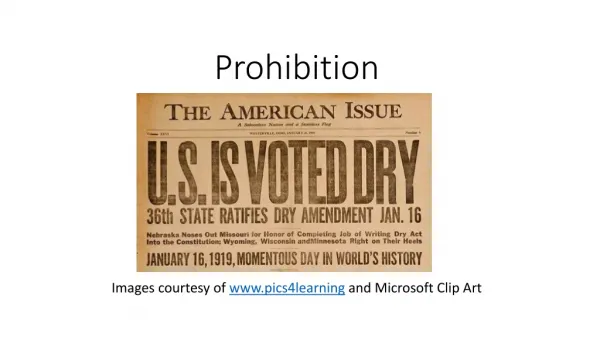
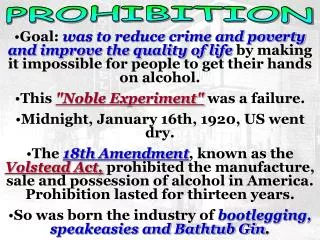
Prohibition • 18th amendment: Jan. 16 1919. • -It prohibited the sale, manufacture, and transport of intoxicating liquor. But it did not define intoxicating liquor or spell out penalties) • Volstead Act: Oct. 28 1919. • Basically gave state and federal govt. the power to enforce the ban
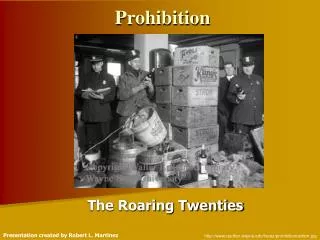
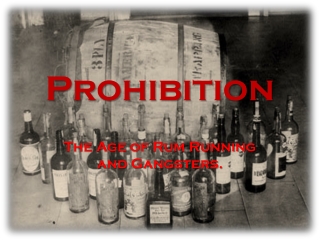
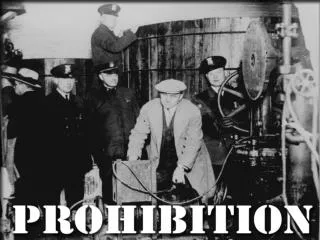
Impact • Bootlegging • Speakeasies • Mafias and Organized crime increases • General ambivalence toward the law. • General crime increase
Repeal • 21st amendment repealed the 18th amendment which effectively repealed prohibition in the U.S.
Questions? • Do you think prohibition could work today? Do you think that America should have prohibition today? • Why do you think prohibition failed? • Why was there such a large increase in crime during this period? • Sources: http://history1900s.about.com/od/1920s/p/prohibition.htm