The Ethics of Adam Smith: Balancing Self-Interest and Justice in Capitalism
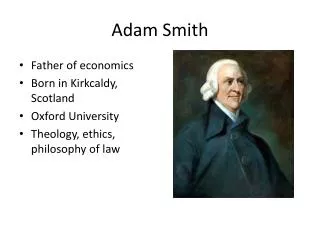
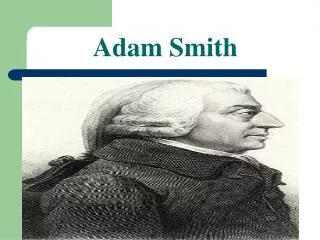
Adam Smith, the father of free-market capitalism, highlighted the role of self-interest in human behavior. He famously noted that we rely on the self-serving motivations of producers, like butchers and bakers, for our sustenance. However, Smith emphasized that this pursuit of self-interest must be constrained by justice. He argued that a society thrives when individuals are free to pursue their interests, as long as they do not violate justice. His works, notably "The Theory of Moral Sentiments," underscore the necessity of ethics in economic practices, making it clear that capitalism requires a foundation of justice and benevolence.

The Ethics of Adam Smith: Balancing Self-Interest and Justice in Capitalism
E N D
Presentation Transcript
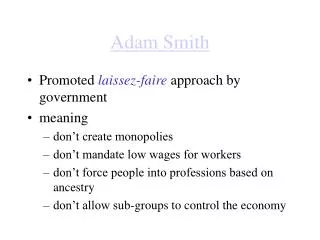
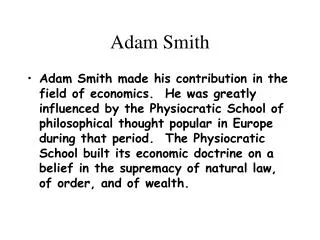
Ethics & EconomicsAdam Smith, considered by many to be the father of free-market capitalism, emphasized the importance of coming to grips with the fact that self-interest drives people. He points out that, “It is not from the benevolence of the butcher, the brewer, or the baker, that we expect our dinner,but from their regard to their own interest”
However, Smith added a caveat.He categorically said such pursuits need to be constrained:Every man, so long as he does not violate the laws of justice, is left perfectly free to pursue his own interest his own way, and to bring both his industry and capital into competition with those of any other man, or order of men.
Such a pursuit was acceptable because according to Smith, if every one pursued self-interest, society would be better off, as if led by an invisible hand. That view infused the system of free-market capitalism
It is of considerable importance to business ethics that Adam Smith, preceded his writing of Wealth of Nations, the “bible of capitalism”, by publishing his Theory of theMoral Sentiments, in which the two basic virtues of any decent society – including, especially, modern market society, are justice and benevolence. Advocates of Adam Smith’s economics too often ignore his ethics, but the former is unworkable without the latter.