Download
1 / 3
50 likes | 174 Vues
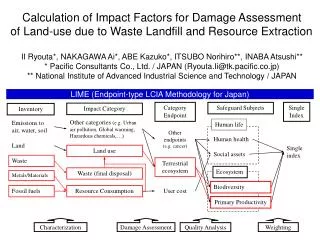
This study explores the environmental impact factors associated with land use due to waste management, landfill activities, and resource extraction in Japan. Utilizing the LIME (Lifecycle Impact Assessment Methodology for Japan), we calculate damage indicators such as biodiversity loss, specifically the extinction risk of vascular plants, and the loss of net primary production. By comparing recycling and disposal systems for municipal solid waste incineration (MSWI) residues, we highlight significant differences in CO2 emissions and land-use implications, advocating for comprehensive data inclusion in lifecycle assessments.

E N D
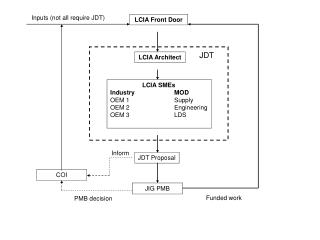
Category Endpoint Safeguard Subjects Single Index Impact Category Inventory Other categories (e.g. Urban air pollution, Global warming, Hazardous chemicals,…) Emissions to air, water, soil Human life Other endpoints (e.g. cancer) Human health Land Single index Land use Social assets Waste Terrestrial ecosystem Ecosystem Waste (final disposal) Metals/Materials Biodiversity Fossil fuels Resource Consumption User cost Primary Productivity Characterization Damage Assessment Quality Analysis Weighting Calculation of Impact Factors for Damage Assessment of Land-use due to Waste Landfill and Resource Extraction II Ryouta*, NAKAGAWA Ai*, ABE Kazuko*, ITSUBO Norihiro**, INABA Atsushi** * Pacific Consultants Co., Ltd. / JAPAN (Ryouta.Ii@tk.pacific.co.jp) ** National Institute of Advanced Industrial Science and Technology / JAPAN LIME (Endpoint-type LCIA Methodology for Japan)
Calculation of Damage Factors Investigation of related land-use (=default inventories on land-use) Calculation of 2 damage indicators per 1m2 land-use by each activity Safeguard Subject: Biodiversity Damage Indicator: Increment of Extinction Risk of Vascular Plants By Lost Population Safeguard Subject: Primary Productivity Damage Indicator: Loss of Net Primary ProductionBy land change and occupation Impact factors on ‘eco-system’ by land-use due to waste landfill and resource extraction were developed.
Expanded Systems for Equal Functional Units solidification of fly ash ash treatment landfill extraction of aggregate Treatment of 1,000kg MSW residues Production of 476kg aggregates Production of 1,630kg cements production of cement #3 #2 System #1 Landfill of MSWI residues #1 Slag production by ash melting System #2 0 200 400 600 800 1,000 1,200 1,400 1,600 Landfill of fly ash after solidification CO2(kg) Eco-cement (production of cement from MSWI residues) System #3 #3 #2 #1 NPP damage (t) 0.000 0.010 0.020 0.030 0.040 0.050 A Case Study Comparison of recycling/disposal systems of MSWI residues • Results for CO2 and Land-Use is quite different for this case. • Land-use aspects is worth to include in LCA for IWM