A Macromolecule Investigation
Dive into the fascinating world of macromolecules, the essential building blocks of life. Explore the four main types of monomers: saccharides, amino acids, fatty acids, and nucleotides, each contributing to the formation of vital polymers like polysaccharides, proteins, lipids, and nucleic acids. Discover how these macromolecules serve crucial roles in energy storage, structural support, and cellular processes. This investigation includes hands-on stations to measure fat content in bacon, detect sugars, and evaluate lipid densities, reinforcing the connection between structure and function in biological systems.


A Macromolecule Investigation
E N D
Presentation Transcript
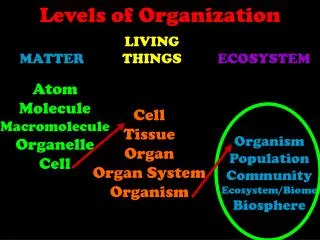
What Are Macromolecules? Polymer Monomer
What are monomers that make them? • 4 main monomer types • Saccharides • Amino Acids • Fatty acids • Nucleotides
What polymers do they make? • Saccharides Polysaccharides, carbohydrates, fiber, sugars • Amino Acids Proteins • Fatty Acids Lipids, fats • Nucleotides DNA and RNA
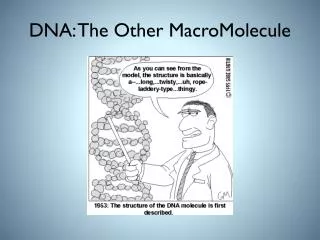
What do macromolecules do? • Polysaccharides: Energy storage (carbs), structural support (fiber in plants) • Proteins: Cellular machinery (enzymes), cell communication • Lipids: Energy storage, cellular membranes • DNA: Instructional database, like a computer code
Today: Focus on carbohydrates and lipids • Station 1: Determine fat content of bacon and compare to food labels • Station 2: Detecting presence of sugars as monomers (simple sugars) or polymers (complex sugars) • Station 3: Measuring the densities of lipids