The Division of India and the Rise of Southeast Asia Post-WWII
After World War II, India was divided into two nations—Hindu-majority India and Muslim-majority Pakistan. This partition led to mass migrations with significant violence and loss of life. Jawaharlal Nehru emerged as India's first Prime Minister, implementing socialist policies and driving industrial growth. Meanwhile, in Pakistan, East Pakistan's cultural differences led to its eventual independence as Bangladesh. Southeast Asia saw nations like the Philippines and Indonesia gaining freedom, while Vietnam experienced conflict under French rule, eventually leading to communist control by 1975.


The Division of India and the Rise of Southeast Asia Post-WWII
E N D
Presentation Transcript
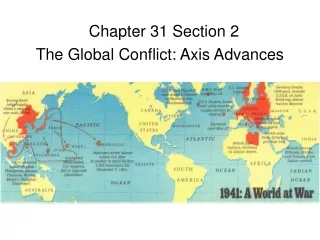
31-2 South and Southeast Asia
I. India Divided • A. After WWII, India was divided into 2 countries based on religion • 1. India-Hindu • 2. Pakistan- Muslim
B. In 1947 Muslims fled to Pakistan while Hindus fled to India • 1. Mass migrations led to violence, millions were killed
II. The New India • A. India formed a parliamentary government with Jawaharlal Nehru as prime minister • 1. Nehru wanted a moderate socialist state • 2. Industry tripled in 15 years
B. Indira Gandhi was the next Prime Minister • 1. During her rule, militant Sikhs demanded freedom for Punjab • 2. Gandhi used force to suppress the rebels, she was assassinated in retaliation
III. Pakistan • A. East and West Pakistan are very different • 1. East- marshy land densely populated with rice farmers • 2. West- Dry and mountainous
IV. Southeast Asia • A. By 1949; Philippines, Burma, Malaya, and Indonesia had all gained freedom • B. In Vietnam, Ho Chi Minh and the communists fought against French rule • 1. In 1945 they controlled North Vietnam • 2. The French kept control of South Vietnam
C. By 1965, Communist guerrillas (Viet Cong) were ready to seize South Vietnam • D. The U.S. began by providing aid to S. Vietnam but sent troops by March 1965 • E. By 1975, All of Vietnam, Laos, and Cambodia fell to Communism
F. Pol Pot became dictator of the Khmer Rouge in Cambodia • 1. This brutal regime killed all dissidents and intellectuals