Alabama Walking School Bus: A Guide to Promoting Safe Walking to School
130 likes | 239 Vues
The Walking School Bus is a key initiative of Alabama's Safe Routes to School Program, designed to promote safety and fitness among students. Conducted by trained volunteers, this program encourages kids to walk to school together, reducing traffic and enhancing community engagement. Ideal for neighborhoods with a significant number of walkers, it focuses on safety audits, community awareness, and building a supportive environment for safe walking paths. Join us to improve student health and safety in our communities!


Alabama Walking School Bus: A Guide to Promoting Safe Walking to School
E N D
Presentation Transcript
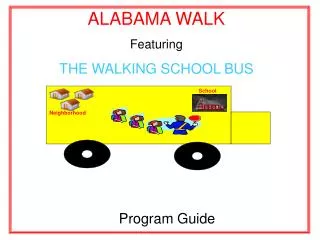
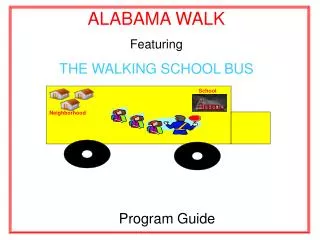
ALABAMA WALK Featuring THE WALKING SCHOOL BUS School Neighborhood Program Guide
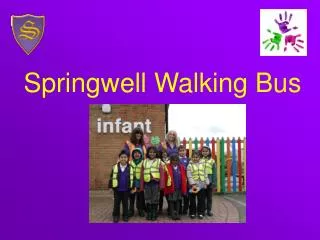
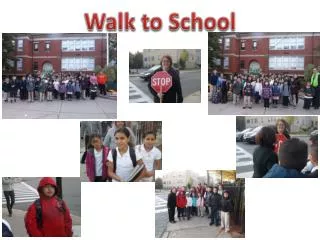
WHAT IS THE WALKING SCHOOL BUS? • A component of the Alabama Safe Routes to School Program • Conducted by trained volunteers who serve as escorts • A method of promoting highway safety and physical fitness • Students join as walkers pass their home
WHO NEEDS A WALKING SCHOOL BUS? • Neighborhood schools where a majority of the students walk. • Neighborhood schools with a high percentage of students who are driving within a two mile radius • Neighborhood schools prone to high crime/high vehicle crash statistics
GETTING THE WHEELS “ROLLING” • Meet with School Representatives • Give brief explanation of the program • Conduct neighborhood safety surveys and audits • Distribute promotional and educational material
POTENTIAL GOALS • Increase the number of students walking • Increase physical fitness of area students • Raise community awareness • Reduce unlawful behavior • Making necessary highway safety improvements • Tie to other neighborhood safety initiatives
GETTING THE WORD OUT ABOUT SRTS • Identify and validate community SRTS problems • Create/distribute a promotional flyer • Find a community SRTS champion • Prepare brief introductory • Get SRTS message on local agency agendas • Appoint a work team • Organize community meetings with target audience
THE FIRST SRTS MEETING AGENDA • Working team introduction • How the program works • Overview of problems • Questions/Answers • Preview neighborhood street maps • Identify safety improvements • Recruit volunteers to sign up • Hold subsequent meetings as necessary
Route Identification Location/type of improvements Avoid busy intersections Use of residential streets Learn/Teach basic pedestrian “Rules of the Road” Use of scenic and educational points Interaction with law enforcement SRTS WALKING BUS DRIVERS TRAINING
DEVELOPING NEIGHBORHOOD ROUTE OWNERSHIP • Conduct a naming the route contest • Install signs designating the Route • Distribute goal oriented flyer, brochures/bookmarks • Secure promotional sponsors • Get “Bus Driver” safety clothing and equipment
SAMPLE ROTATION SCHEDULE FORM Walking School Bus Group Name: ____________________________________ Months/Year: ________________________ Group Leader: _______________________ Agency: _____________________
NEIGHBORHOOD PARTICIPATION AWARD REWARDING COMMUNITY EFFORTS
LET’S GET ROLLING AND HAVE A GREAT YEAR! School Neighborhood