Excretory system
70 likes | 179 Vues
The excretory system is vital for maintaining the body's homeostasis by removing waste, conserving water, and regulating blood volume and osmotic pressure. Key organs include the liver, which detoxifies substances, and the kidneys, responsible for filtering blood, producing urine, and regulating blood pressure. The bladder stores urine, while the large intestine manages solid waste and reclaims water. The skin also plays a role in temperature control and waste release. Common disorders include bladder cancer, kidney stones, urethritis, and nephritis, affecting overall health.


Excretory system
E N D
Presentation Transcript
Excretory system By: Miguel, Coralyn, Luis, and Aaron
What does it do? • It removes waste from the body • Conserves water • Reduction of osmotic stress and osmoregulation • Regulates blood volume concentration
Liver • The liver turns poisonous substances into bile which breaks down fats into useable fats and waste • Turns ammonia into urea
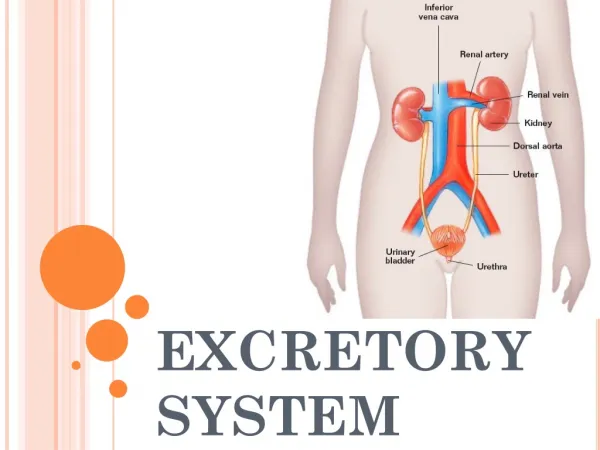
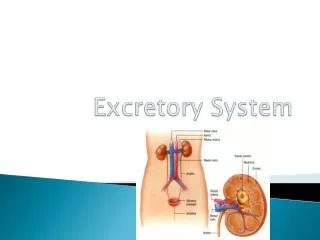
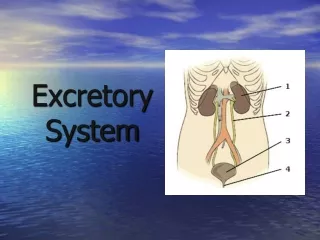
Kidneys & Bladder • Removes urea • Clean blood • Makes urine • Helps control blood pressure and make red blood cells • Helps keep your bones healthy • The kidney sends waste to the bladder until it needs to be released
Large Intestine • Removes solid waste • Collects water that can be reused
Skin • Controls temperature using Eccrine glands that secrete mostly water and salt. • Releases pheromones
Diseases • Bladder Cancer-Bladder cancer is the rapid, uncontrolled growth of abnormal cells in the bladder. • Kidney stones-Build up of unneeded material in the kidneys • Urethritis-Urethritis is inflammation of the urethra. • Nephritis-inflammation of the nephrons in the kidneys.