Download
1 / 11
110 likes | 245 Vues
This case study explores the rich history and development of Bayerische Motoren Werke AG (BMW) from its founding in 1916 as Bayerische Flugzeug-Werke to its transformation into a global automotive leader. Key milestones include the transition to motorcycle and automobile production, acquisition of Rover Group, and the launch of the new MINI. The study highlights BMW's innovative practices, management techniques, and commitment to quality and customer satisfaction amidst market challenges. Future strategies focus on maintaining market position, customer loyalty, and sustainable practices.

E N D
Case study of group 4 Bayerische Motoren Werke AG Victoria Tikhonova Anna Kichigina Anastasia Loseva
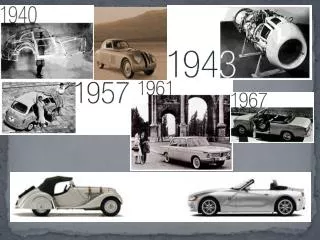
History of BMW company • 1916 – Founding of Byerische Flugzeug-Werke. • 1917 – Rapp-Motoren Werke was renamed Bayerische Motoren Werke GmbH. • 1918- BMW GmbH becomes BMW AG. After World War I – aircraft production • 1923 - motorcycle production • 1928 – automobile production • since 1959 - The dominating shareholder Quandt family • 1994 – purchase of British Rover Group (Rover, Land Rover, MINI and MG brands) • 2001 – launch of new MINI
Milestones of success - Management structure - Most innovative company - The technological lead - Cooperation with science - Happy Workers, Better Cars - Ecology oriented
BMW innovations • Management techniques • Lighting-fast changes • Mobile-phone messages • Ideas first
Productsandservices • Products: • BMW brand • MINI brand • Rolls-Royce brand • Motorcycles • Financial Services: financing and leasing, asset management, dealer financing and company car pools
Current situation • In October 2008 – sales fell on 8,3% (decrease od demand on developed markets) • Third-quarter Group revenues decreased by 8.6 % to euro 12,588 million • The third-quarter profit before financial result fell by 60.2 % to euro 387 million
Future • focus on earnings • sustain strong market position • maintain high level of customer satisfaction • ensure stability of dealer organization • remain committed to its "production follows the market" philosophy • proving to be an appropriate and forward-looking entrepreneurial decision • continue long-term investments • speeding up cost cutting and efficiency improvement measures