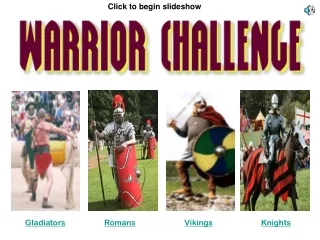
The Legacy of Gladiators: History, Culture, and Combat in Ancient Rome
Gladiators, originally slaves or captured prisoners, entertained the upper class in ancient Rome, battling not only against each other but also animals, in the grand Colosseum. These brutal events, held for entertainment, often offered a slim chance of social advancement for participants. Roman Emperor Commodus admired gladiatorial strength, falsely equating it with bravery, while the rise of Christianity led to the decline of these bloody spectacles as emperors like Constantine reformed the societal norms of the time. Explore the complex dynamic of power, entertainment, and societal change in this gripping history.


The Legacy of Gladiators: History, Culture, and Combat in Ancient Rome
E N D
Presentation Transcript
Gladiators Hollywood History
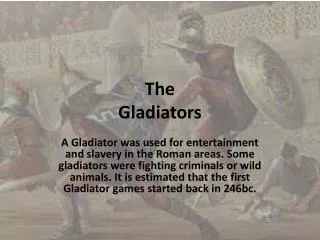
Hoo? • Originally slaves • Captured prisoners of war • Africans • Christians • Lower than actors, athletes, and musicians
Y? • Entertainment for the upper class • A potential means of advancing upwards in society • Not necessarily for military training
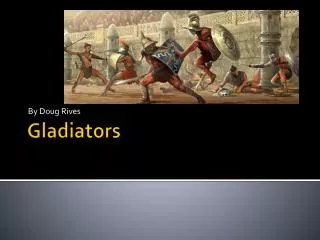
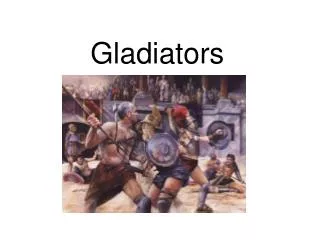
Methods • One on one • Groups against groups • Animals against animals • Animals against humans • Some battles were to be fair contests • Some were intended to be massacres • Women are occasionally involved
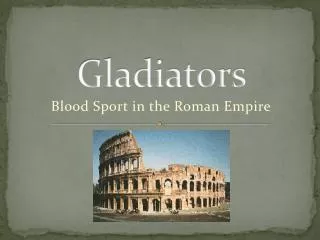
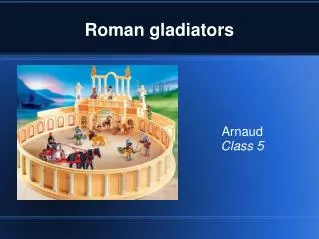
The Colosseum • Largest venue for Gladiatorial combat • Contained underground tunnels and a retractable roof for shade • Could be flooded to allow for naval battles • Had a sand floor to soak up the blood quicker
Commodus…the Gladiator? • Roman Emperor Commodus (180 – 192 CE) loved the idea of being a Gladiator • Believed they represented strength and bravery • Often dressed as a Gladiator at social gatherings • Fought prisoners and other unprepared people • Often not given proper weaponry or armor
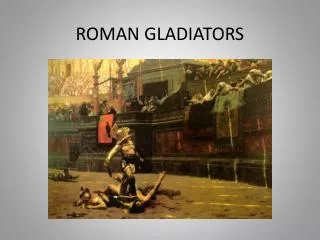
One on One Battle • Different styles (see assignment) • Ended either with death or surrender • The surrendered would raise their thumb, index, and middle fingers as a symbol of submission • The Emperor, speaking for the crowd, would either signal thumbs down (drop your weapon) or thumb into the body (kill the opponent) • Very few gladiator battles actually ended with death
The End • Rise of Christianity • Gladiator games are seen as games meant to honor the pagan Gods • Also too bloody for Christian societies • Constantine (first Christian Emperor) rebuilds Rome by eliminating older blood sports (~300’s CE) • Olympics (honored pagan Gods) • Gladiator games • 476 CE – Western Roman Empire falls