Download
1 / 8
80 likes | 187 Vues
This article explores the Federal Reserve System, detailing its structure, independence from the government, and primary functions. It covers critical topics such as the regulation of banks, the discount rate, and monetary policy. Learn how the Fed acts as a lender of last resort, the Federal Open Market Committee's role in setting interest rates, and the balance between maximizing output/employment and maintaining stable prices. Insights into the tenure of Ben Bernanke and historical shifts in monetary policy reveal the Fed's impact on the U.S. economy.

E N D
The Federal Reserve How our Central Bank is structured
Critical Thinking • How & Why is the Fed independent from Government? How? Why?
3 Primary Functions of Fed • Regulates banks • ensure banks follow laws (housing bubble—what happened?) • Acts as Banker’s Bank • Makes emergency loans to banks => “lender of last resort” • Discount rate: interest rate Fed charges banks (currently 0.75%) • Conducts Monetary Policy • regulates money supply to control short term interest rates • Federal Funds Rate: interest rate Fed sets (currently 0.0%)
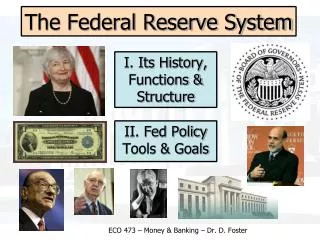
The Federal Reserve System Federal Reserve Board (7-Governors in Washington) 12-District Banks Ben Bernanke Worked at Fed since 2002 Chairmen of Fed since 2006 (Term ends Jan. 2014) Re-appointed for 2nd term 2009
Federal Open Market Committee(FOMC) • Main policy-making part of Federal Reserve (12 members) • Meets 8-times per year to vote on Monetary Policy ↑ Money Supply ↓ Short term interest rates =>
Federal Reserve in action 1999 - 2012 0.0% 2012
2 Primary Goals of Fed What makes these 2-Goals in direct conflict? Goal #1 Maximum output & employment Goal #2 Stable Prices LRAS1 SRAS1 Price Level AD1 Real GDP Answer: High GDP & Low Unemployment can lead to inflation i.e. solving goal #1 often will risk failing at goal #2
Video Interview #1: Bernanke’s Plan: U.S. Economy LRAS1 SRAS1 Price Level AD1 Real GDP