Understanding Element Reactivity: From Highly Reactive to Noble Gases
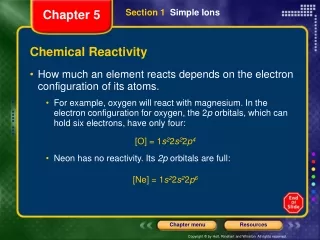
Elements exhibit a range of reactivities, influencing their natural occurrences. Highly reactive elements like calcium readily combine with others, forming compounds such as calcium carbonate and calcium sulfate. In contrast, less reactive metals such as gold, silver, and copper can be found in their uncombined form in nature, making them some of the first metals utilized by humans. Noble gases, known for their extreme lack of reactivity, do not interact with other elements, earning them the label of inert gases. This diversity in reactivity shapes the chemical landscape of our planet.

Understanding Element Reactivity: From Highly Reactive to Noble Gases
E N D
Presentation Transcript
8.2.2 - Although most elements are found in combinations on Earth, some elements are found uncombined
Reactivity of Elements • Chemical elements have different reactivities. Some elements, such as calcium, are highly reactive and therefore readily join with other elements, e.g. calcium carbonate, calcium sulfate. • Other elements such as gold, silver and copper are less reactive which means they can be found in nature un-reacted. It is this reason that these were the earliest metals to be found and used by humans. • Further, the noble gases are extremely un-reactive and do not react with any other elements. For this reason they are also known as the inert gases.