Understanding the Legislative Process: From Bill Introduction to Presidential Action
This guide explores the legislative process in detail, including how a bill becomes a law, the types and purposes of committees, and key legislative actions. Discover where revenue bills originate, the roles of the Rules Committee, and the various types of resolutions. Understand the significance of leadership positions and the distinction between House and Senate procedures. This comprehensive overview includes topics such as impeachment, apportionment, redistricting, and gerrymandering, along with insights into legislative representation and the concepts of universalism and specialization.

Understanding the Legislative Process: From Bill Introduction to Presidential Action
E N D
Presentation Transcript
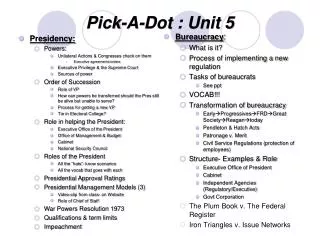
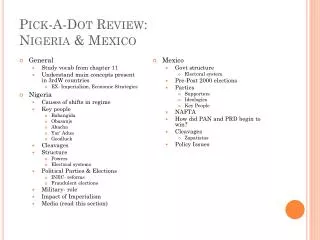
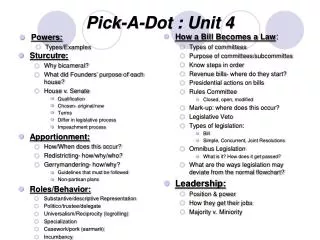
Powers: Types/Examples How a Bill Becomes a Law: Types of committees Purpose of committees/subcommittes Know steps in order Revenue bills- where do they start? Presidential actions on bills Rules Committee Closed, open, modified Mark-up: where does this occur? Legislative Veto Types of legislation: Bill Simple, Concurrent, Joint Resolutions Omnibus Legislation What is it? How does it get passed? What are the ways legislation may deviate from the normal flowchart? Leadership: Position & power How they get their jobs Majority v. Miniority Pick-A-Dot : Unit 4 • Sturcutre: • Why bicameral? • What did Founders’ purpose of each house? • House v. Senate • Qualification • Chosen- original/now • Terms • Differ in legislative process • Impeachment process • Apportionment: • How/When does this occur? • Redistricting- how/why/who? • Gerrymandering- how/why? • Guidelines that must be followed • Non-partisan plans • Roles/Behavior: • Substantive/descriptive Representation • Politico/trustee/delegate • Universalism/Reciprocity (logrolling) • Specialization • Casework/pork (earmark) • Incumbency