Watershed Vulnerability Assessment: Cold Wet Flats and High Wet Mountains
This document discusses the sub-classification of watersheds based on stressors and conditions, focusing on two specific types: Cold Wet Flats and High Wet Mountains. It highlights the management implications that arise from these classifications, emphasizing the need for evaluating permits on a watershed basis. It also notes that high vulnerability watersheds require different assessment protocols and that their response thresholds are lower than previously anticipated, which may affect management strategies and conservation efforts.

Watershed Vulnerability Assessment: Cold Wet Flats and High Wet Mountains
E N D
Presentation Transcript
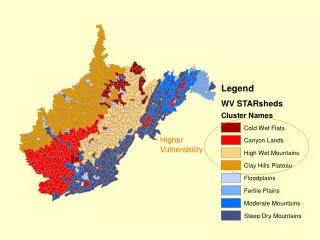
Cold Wet Flats Higher Vulnerability
Sub-classification of watersheds by stressors & condition: Canyon Lands (5)
Sub-classification of watersheds by stressors & condition: High Wet Mountains (9)
Management Implications • Permits should be evaluated on a watershed basis. • High vulnerability watersheds should be assessed differently. • Response thresholds are lower than expected.